
You have 0 items in your cart

Why Every Business Needs a Regulatory Compliance Lawyer

A regulatory compliance lawyer is a legal professional who helps businesses steer complex regulatory frameworks, manage legal risks, and avoid costly enforcement actions. These attorneys specialize in ensuring companies follow federal, state, and industry-specific regulations while building proactive compliance programs.
Quick Answer: What Does a Regulatory Compliance Lawyer Do?
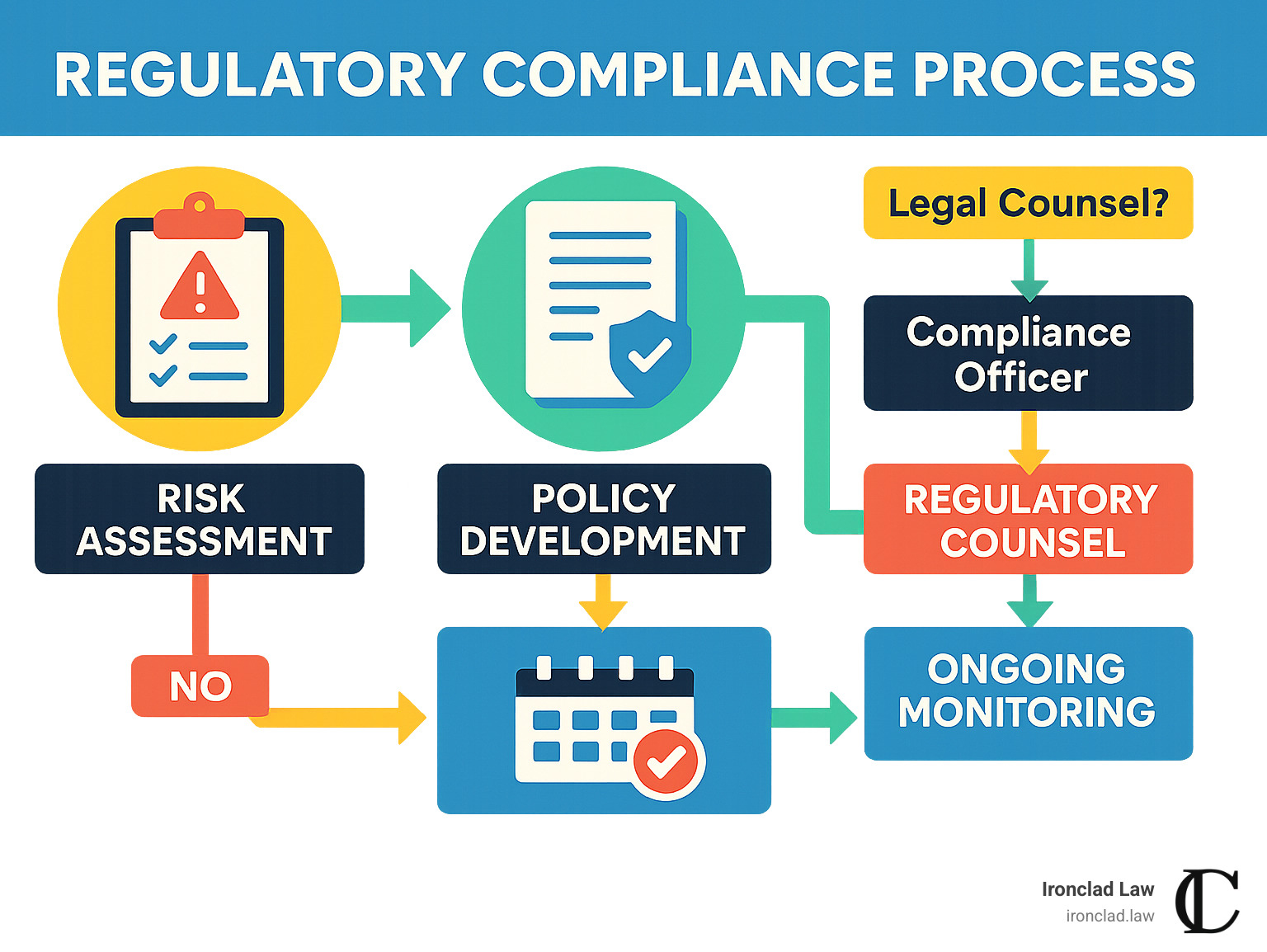
- Risk Assessment: Identify potential compliance gaps and legal vulnerabilities
- Policy Development: Draft internal compliance policies and procedures
- Regulatory Defense: Represent clients during government investigations and audits
- Training Programs: Educate employees on compliance requirements
- Ongoing Monitoring: Conduct regular compliance audits and updates
The compliance field has exploded in recent years. As one compliance attorney noted in the National Jurist, “compliance is becoming a hot legal specialty due to its work-life balance and alignment with nontraditional interests.” With regulatory frameworks constantly evolving across sectors, businesses face mounting pressure to stay compliant.
The stakes are high. Non-compliance can result in massive fines, criminal charges, and irreparable damage to your reputation. Yet many business owners don’t realize they need specialized legal help until it’s too late.
As Michael Hurckes, Managing Partner at Ironclad Law with experience in financial services regulation and compliance, I’ve seen how the right regulatory compliance lawyer can transform a business from reactive firefighting to proactive risk management.
Relevant articles related to regulatory compliance lawyer:
What a Regulatory Compliance Lawyer Actually Does

Many business owners think a regulatory compliance lawyer is just a compliance officer with a law degree. That’s like saying a surgeon is just a nurse with better tools.
Your compliance officer monitors operations and tracks metrics. But when regulators show up with subpoenas, you need someone who can speak legalese fluently and protect your interests. Think of it this way: a compliance officer is your security system. A regulatory compliance lawyer is your personal bodyguard who’s also an expert locksmith and negotiator.
Core Functions of a Regulatory Compliance Lawyer
Policy drafting creates living compliance frameworks that work in the real world. Every business has unique risks and operational quirks. Cookie-cutter policies are useless when regulators start asking tough questions.
Training programs translate complex regulatory requirements into plain English your team can understand and follow. There’s no point having brilliant policies if employees need a law degree to understand them.
Internal investigations become critical when suspicious activity surfaces. We dig deep while protecting attorney-client privilege, preventing minor issues from becoming major enforcement actions.
Litigation support strategically positions your company to minimize damage when facing regulatory scrutiny. We understand agency priorities and often resolve issues before they escalate.
Industries Served by a Regulatory Compliance Lawyer
Healthcare faces HIPAA privacy rules, Medicare billing requirements, FDA oversight, and state licensing boards. California healthcare entities deal with additional Knox-Keene Act requirements and corporate practice restrictions.
Financial services and fintech steer SEC, FINRA, CFTC, and banking regulations. Anti-money laundering programs require sophisticated monitoring systems and regular updates.
Data privacy has exploded since GDPR. Companies need comprehensive data mapping, breach response plans, and privacy impact assessments across multiple state laws.
Environmental and energy regulations span hazardous waste disposal to air quality monitoring. RCRA, Clean Air Act, and OSHA standards create overlapping requirements requiring specialized expertise.
Specialty Areas & Evolving Regulations
The regulatory world moves at breakneck speed. Technology advances and global events create entirely new compliance challenges that didn’t exist five years ago.
ESG (Environmental, Social, and Governance) Mandates have transformed from corporate buzzwords into hard legal requirements. Companies now face mandatory reporting on carbon emissions, diversity metrics, and supply chain labor practices.
Anti-Money Laundering (AML) and Know Your Customer (KYC) requirements have become incredibly sophisticated. Financial institutions must implement complex monitoring systems to detect suspicious transactions, with banks facing fines exceeding $100 million for violations.
Healthcare Privacy (HIPAA) and Security rules continue evolving as cyber threats multiply. Healthcare data breaches now cost an average of $10 million per incident, including regulatory fines and reputation damage.
Data Privacy (GDPR/CCPA) creates a compliance puzzle for companies operating across borders. European customers expect GDPR protections, California residents have CCPA rights, and other states are rapidly passing their own privacy laws.
Compliance is now considered a hot legal specialty with strong career prospects. Our compliance services help businesses steer these evolving areas.
Emerging Compliance Frontiers
Cryptocurrency and Digital Assets represent the Wild West of regulation. Multiple agencies claim jurisdiction over different aspects of crypto, requiring guidance on securities laws, money transmission, and tax obligations.
Global Supply Chain Compliance has exploded beyond traditional trade regulations. Companies must verify their entire supply chain is free from conflict minerals, forced labor, and environmental violations.
RegTech and Automation tools revolutionize compliance monitoring. AI-powered systems detect suspicious patterns in real-time and generate regulatory reports, but require careful legal oversight.
Remote Work Policies created unexpected compliance headaches when employees scattered across state lines, triggering employment laws in multiple jurisdictions and cross-border data transfer requirements.
When & Why to Hire a Regulatory Compliance Lawyer
| Situation | Compliance Officer | Regulatory Compliance Lawyer |
|---|---|---|
| Daily monitoring | ✓ | |
| Policy updates | ✓ | ✓ |
| Government investigation | ✓ | |
| Legal privilege needed | ✓ | |
| Complex regulatory interpretation | ✓ | |
| Enforcement defense | ✓ |
Timing matters more than you think. Most business owners call us when they’re already in trouble. The smartest companies bring in a regulatory compliance lawyer before trouble starts.
While compliance officers handle day-to-day monitoring, they hit a wall when serious legal issues arise. When the SEC launches an investigation or HIPAA violations surface, you need someone with legal training and courtroom experience.
The Proactive Advantage
Companies that invest in proactive compliance save dramatically more than those who wait for enforcement actions. 75% of Fortune 100 companies use external regulatory compliance lawyers for specialized needs – they’re protecting their future, not throwing money away.
The Real Cost of Getting It Wrong
HIPAA violations can cost up to $1.5 million per incident. Financial services violations reach hundreds of millions. Environmental violations can shut down operations overnight.
For companies facing regulatory examinations, our regulatory examinations & enforcement counsel services provide specialized support. Healthcare organizations can find additional guidance through healthcare compliance research.
Real-World Scenarios Requiring Counsel
SEC Investigations: When federal investigators arrive, every word matters. We’ve successfully defended clients through multi-year investigations, often achieving no-action outcomes.
HIPAA Breaches: Healthcare data breaches create regulatory chaos with 72-hour notification requirements and potential OCR investigations.
FCPA Investigations: Foreign corruption allegations can destroy businesses faster than almost anything else, requiring coordination across multiple countries.
Understanding Fees & Engagement Models
Traditional hourly rates range from $300-800+ depending on complexity and location. Florida and New York experienced attorneys typically charge $400-600 per hour.
Fixed fees provide cost certainty for defined projects like policy development. Subscription models offer ongoing support for predictable monthly fees. Alternative Legal Service Providers report 30-50% savings over traditional firms with 95% client satisfaction rates.
Building & Maintaining an Effective Compliance Program
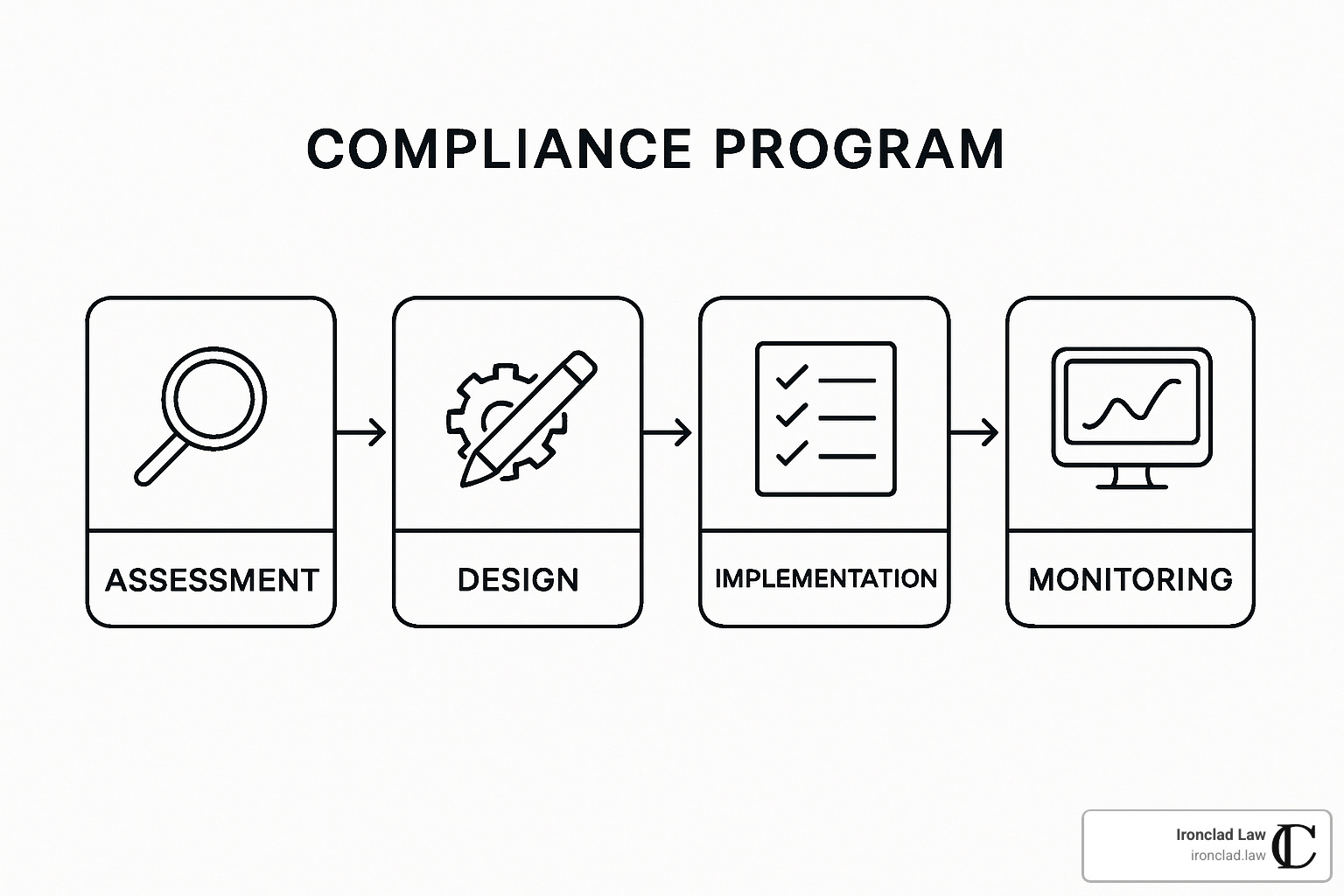
Building a compliance program that actually works requires practical implementation. The best compliance program is worthless if employees can’t understand it or won’t follow it.
Starting with Smart Risk Assessment
Every effective program begins with understanding what could actually go wrong in your business. We dig into your operations, industry trends, and company culture to identify real vulnerabilities. A healthcare practice might assume HIPAA is their biggest risk, but we often find billing compliance or employment law creates bigger exposure.
Finding and Fixing the Gaps
We conduct “reality checks” – comparing regulatory requirements against day-to-day operations. This gap analysis reveals surprising disconnects between policies and practice. We prioritize gaps that combine high regulatory risk with active enforcement trends.
Creating Your Implementation Roadmap
We create detailed implementation roadmaps breaking complex requirements into manageable steps with clear deadlines. Our approach emphasizes quick wins early to build momentum and demonstrate value.
Building Monitoring That Actually Monitors
Without ongoing monitoring and reporting, even the best compliance program becomes obsolete. We implement automated systems for routine issues and human oversight for emerging risks. Modern RegTech automation monitors thousands of transactions while human judgment interprets results.
For comprehensive support, check our regulatory counsel & compliance services.
Step-by-Step Framework Lawyers Use
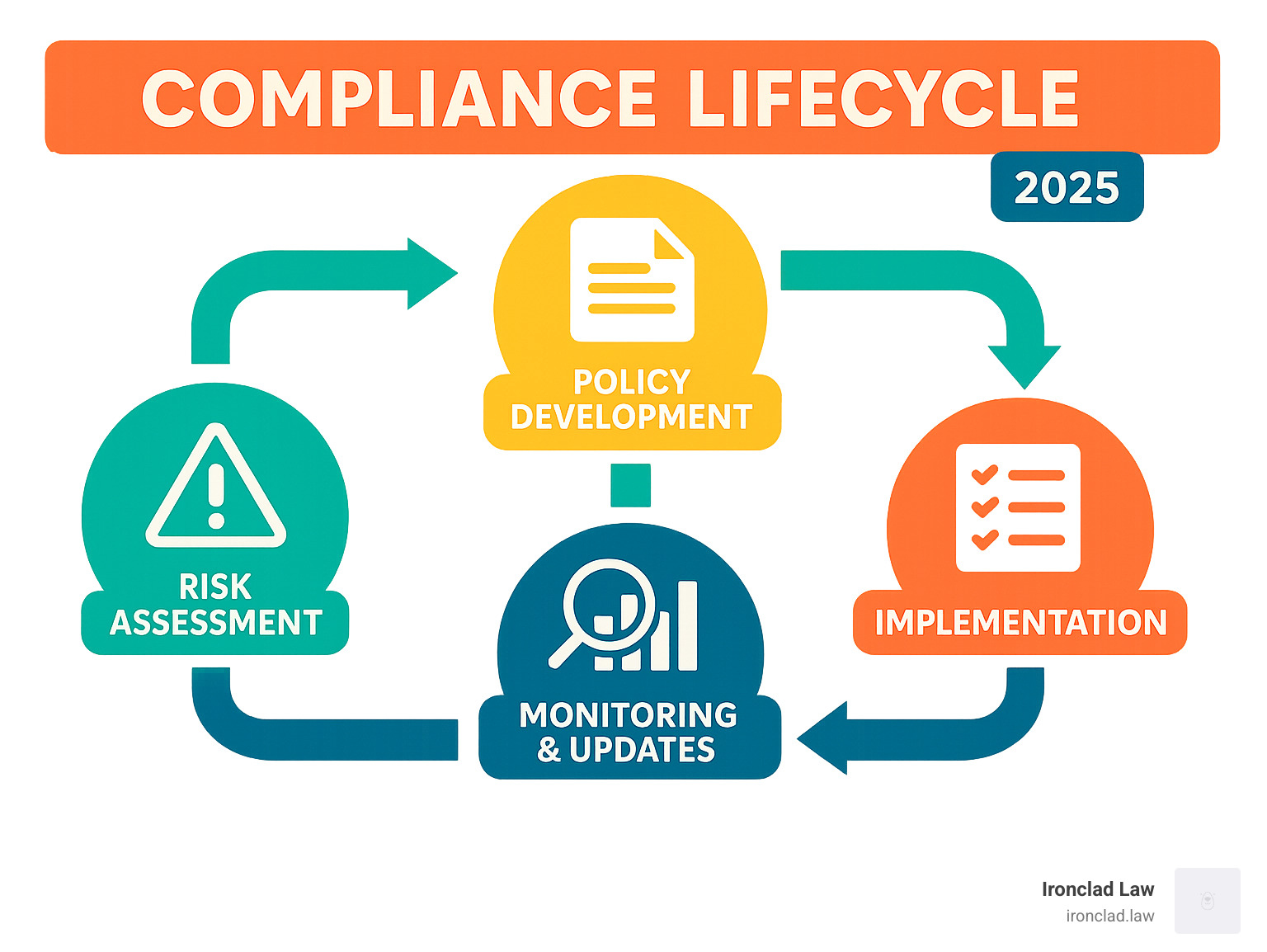
Assess Your Starting Point: Comprehensive assessment through employee interviews, process observation, and historical incident review.
Design Solutions That Fit: Custom solutions aligned with actual business operations, from mobile-friendly policies to visual workflows.
Implement in Phases: Logical phases starting with highest-risk areas, building momentum through early successes.
Train People, Not Just Policies: Role-specific training using real industry examples and interactive exercises.
Monitor What Matters: Focus on leading indicators and risk patterns before they become problems.
Update Before You Have To: Stay ahead of regulatory changes through ongoing relationships and regular program reassessments.
Careers & Skills in Regulatory Compliance Law

Regulatory compliance has quietly become one of the hottest areas in law, offering actual work-life balance while helping businesses grow rather than just fighting battles.
What It Takes to Succeed
Success requires strong analytical skills to parse complex regulations and excellent communication abilities to explain them in plain English. Project management skills are crucial for coordinating initiatives across departments. Technology proficiency is increasingly important as RegTech tools become standard.
Most importantly, you need to understand business operations – compliance isn’t just following rules, it’s helping businesses follow rules while making money.
Getting Started: Education and Credentials
Most positions require a J.D., though some accept a Master of Jurisprudence. Professional certifications include Certified Information Privacy Professional (CIPP) for privacy lawyers, Certified Anti-Money Laundering Specialist (CAMS) for financial services, and Certified Compliance & Ethics Professional (CCEP).
Career Paths
In-house positions offer the best work-life balance. Law firm practices provide variety and higher compensation. Consulting firms offer project-based work. Independent consulting gives complete flexibility once you build expertise.
Future Outlook
Data Privacy Revolution: Every piece of customer information triggers compliance obligations. Companies desperately need lawyers who understand both technology and privacy law.
ESG Goes Mainstream: Environmental, social, and governance requirements are now mandatory, driving massive demand for specialized attorneys.
AI Regulation: Artificial intelligence is creating entirely new regulatory categories. The EU’s AI Act is just the beginning, with companies needing guidance on algorithmic auditing and bias testing.
The compliance field offers a legal career that helps businesses succeed while providing personal satisfaction and work-life balance.
Frequently Asked Questions about Regulatory Compliance Lawyers
What is the difference between a compliance officer and a regulatory compliance lawyer?
Your compliance officer is like a security guard – they handle day-to-day monitoring, check that policies are followed, and spot problems. They’re usually internal employees great at maintaining existing systems.
A regulatory compliance lawyer is your legal SWAT team – we draft legally sound policies, conduct investigations protected by attorney-client privilege, and represent you when regulators arrive. Everything you tell your compliance lawyer is confidential – that privilege doesn’t exist with compliance officers.
Compliance officers keep you safe day-to-day, while regulatory compliance lawyers are your specialized legal advisors when things get serious.
How much does it cost to hire a regulatory compliance lawyer?
Traditional hourly rates range from $300-500 for junior attorneys to $500-800+ for senior specialists. Florida tends to be more reasonable than New York or California.
Alternative options include:
- Fixed-fee projects for defined work like policy development
- Monthly retainers for ongoing counsel
- ALSP models offering 30-50% savings over traditional firms
Proactive compliance is always cheaper than reactive enforcement defense – spending thousands on planning beats spending hundreds of thousands defending violations.
When should a startup engage a regulatory compliance lawyer?
Much earlier than you think. Before launch if you’re in healthcare, financial services, or fintech. If handling personal data, processing payments, or developing safety-critical products, don’t wait.
Planning to raise capital? Investors expect proper compliance programs. It’s easier to build compliance from the start than retrofit later.
Red flag situations requiring immediate help: government inquiries, data breaches, customer complaints about privacy/safety, or whistleblower allegations.
As one expert noted: “proactive compliance programs are more beneficial than those imposed by government settlements.”
Conclusion
Every business owner knows that moment when you realize you’re facing a regulatory challenge that could derail everything you’ve built. That’s when regulatory compliance lawyers become the heroes your business desperately needs.
These professionals aren’t just rule-followers – they’re strategic partners who understand that compliance done right becomes a competitive advantage, not just a cost center.
The change is remarkable. Companies go from sleepless nights worrying about regulatory landmines to confidently expanding into new markets. They shift from reactive panic to proactive dialogue with regulators. They evolve from seeing compliance as a burden to leveraging it as a business enabler.
Risk reduction prevents headline-grabbing disasters – massive fines, criminal investigations, business shutdowns. But the real magic happens in what compliance makes possible: customer trust, investor confidence, and regulatory relationships.
The regulatory landscape isn’t getting simpler. AI governance requirements are emerging rapidly. ESG mandates are becoming standard. Global business means navigating multiple frameworks simultaneously.
At Ironclad Law, we’ve seen how the right approach transforms businesses. Our aggressive defense strategies combined with comprehensive compliance programs give clients confidence to pursue opportunities while managing risks intelligently.
Here’s the truth: regulatory compliance isn’t about playing defense. It’s about playing offense with excellent defense backing you up.
Whether you’re a startup building your first framework or a CEO facing regulatory challenges, the right regulatory compliance lawyer changes everything. They turn compliance from a necessary evil into a strategic asset.
For businesses ready to take compliance seriously, our corporate compliance lawyer services provide comprehensive support.
The bottom line: you can’t afford to treat regulatory compliance as an afterthought. Companies that thrive get ahead of the curve rather than scrambling to catch up. Your business deserves the protection and strategic advantage that comes from working with professionals who understand that compliance, done right, enables success.