
You have 0 items in your cart

Why HIPAA Compliance Matters More Than Ever
A hipaa compliance lawyer is a specialized attorney who helps healthcare organizations and their business partners steer the complex web of federal privacy and security regulations that protect patient health information. These legal professionals serve as essential guides through HIPAA’s three core frameworks—the Privacy Rule, the Security Rule, and the Breach Notification Rule—while defending clients against costly enforcement actions.
Key Services a HIPAA Compliance Lawyer Provides:
- Risk Assessments – Identifying vulnerabilities before they become violations
- Policy Development – Crafting practical, organization-specific compliance programs
- OCR Investigation Defense – Responding to audits from the U.S. Department of Health & Human Services (HHS) Office for Civil Rights (OCR)
- Breach Response – Managing the strict 60-day notification timeline
- Business Associate Agreements (BAAs) – Drafting contracts that protect all parties
- Training Programs – Educating the workforce on privacy obligations
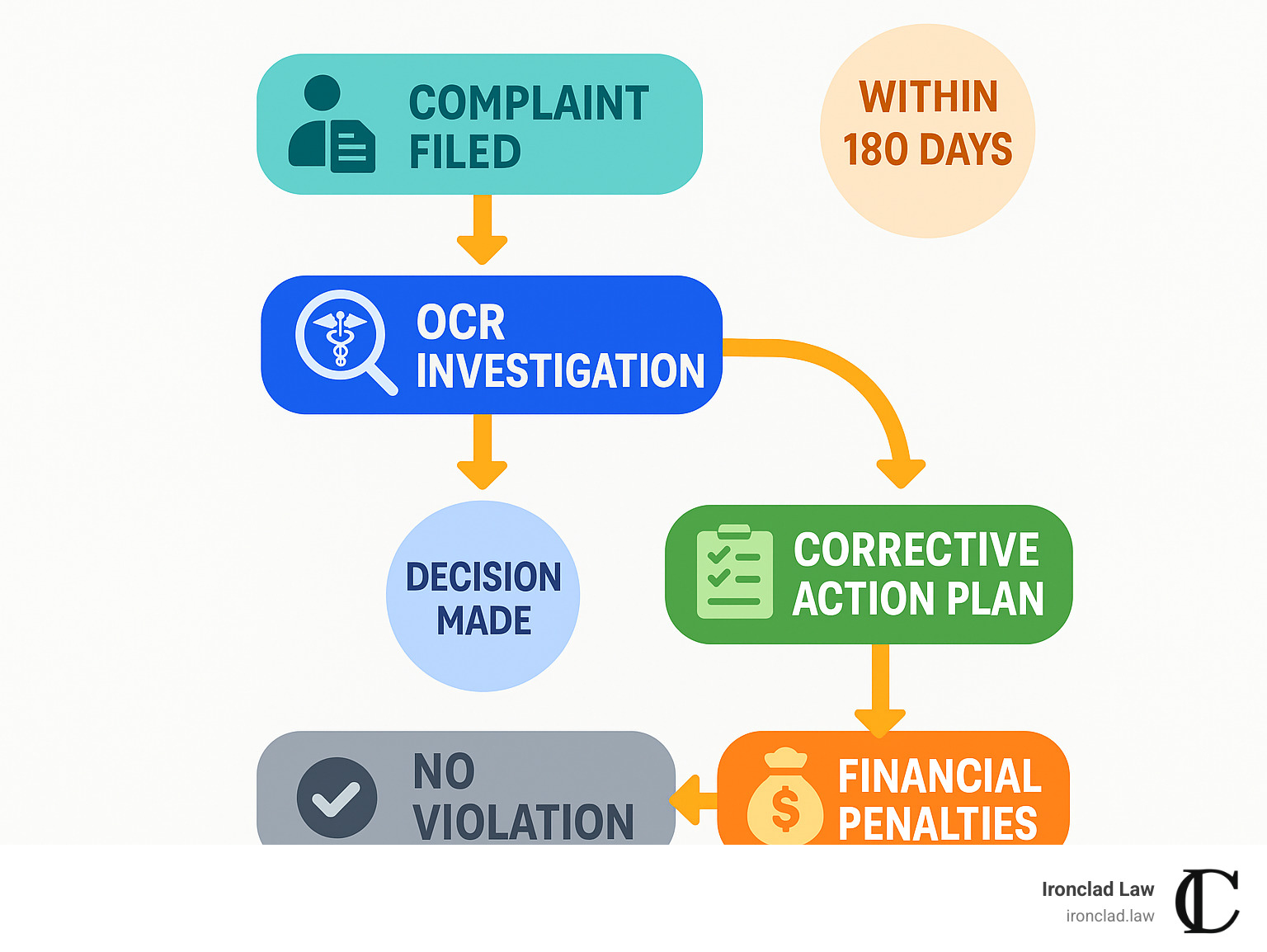
The stakes have never been higher. Around 15,000 complaints are filed with HHS-OCR each year, with approximately 5,000 leading to formal investigations. The Health Information Technology for Economic and Clinical Health (HITECH) Act dramatically increased penalties for non-compliance, making experienced legal counsel essential for any organization that handles protected health information (PHI).
Who Needs HIPAA Legal Support:
- Healthcare providers (hospitals, clinics, private practices)
- Health plans and insurers
- Business associates (IT vendors, billing companies, law firms)
- Digital health startups and telehealth platforms
- Research institutions handling patient data
As Michael Hurckes, Managing Partner at Ironclad Law, I bring deep experience in regulatory compliance and enforcement defense to help organizations steer HIPAA’s challenging landscape. Our firm combines cutting-edge legal technology with an assertive litigation mindset to safeguard clients from the reputational damage and financial penalties that follow hipaa compliance missteps.
Related reading:
- compliance lawyer – a broader look at compliance counsel services
- corporate compliance lawyer – how compliance fits within corporate governance
Do You Need a HIPAA Compliance Lawyer?
If your organization touches protected health information in any way, the answer is probably yes. HIPAA compliance isn’t just about following rules – it’s about protecting your business from devastating financial penalties and reputation damage that can take years to repair.
Think of it this way: would you perform surgery without medical training? HIPAA law is just as specialized, and the consequences of getting it wrong can be just as severe. The regulations are dense, constantly evolving, and full of technical requirements that even well-meaning organizations struggle to steer alone.
The financial reality is sobering. While most HIPAA violations get resolved through corrective action plans, the cases that escalate can result in penalties exceeding $1.5 million. We’ve seen small medical practices face six-figure fines that nearly forced them to close their doors.

Several red flags should immediately trigger a call to a compliance lawyer. OCR investigation letters top the list – when that envelope arrives, you typically have just 30 days to provide comprehensive documentation of your entire compliance program. Data breaches create another urgent need, especially since you have only 60 days to notify patients and regulators.
Startups face unique challenges because they often build their technology first and worry about compliance later. This backwards approach can create expensive problems down the road. Hospitals and health systems need ongoing legal support because their compliance programs are so complex.
Even law firms become business associates when they handle medical records for personal injury or malpractice cases. Many attorneys don’t realize this triggers specific HIPAA obligations that require specialized knowledge to implement properly.
The key insight here is timing. Getting legal help before problems arise costs far less than crisis management after OCR comes knocking. A hipaa compliance lawyer can spot vulnerabilities early and fix them before they become violations.
Common Scenarios Requiring a HIPAA Compliance Lawyer
OCR audit letters arrive without warning and demand immediate, comprehensive responses. These aren’t simple questionnaires – they’re detailed examinations of your entire compliance program. OCR wants to see risk assessments, policies, training records, breach logs, and business associate agreements.
Most organizations panic when they receive these letters because they realize their compliance documentation has gaps. A hipaa compliance lawyer can quickly assess what you have, identify what’s missing, and help organize a response that demonstrates good faith compliance efforts.
Data-sharing contracts represent another common trigger for legal help. Whether you’re a hospital working with a billing company or a tech startup serving healthcare clients, these agreements must precisely define who can access what information and under what circumstances.
State subpoenas create a unique legal challenge because they sit at the intersection of state and federal law. When courts or law enforcement request medical records, organizations must balance their HIPAA obligations against state legal requirements.
Who a HIPAA Compliance Lawyer Typically Represents
Healthcare providers – from solo practitioners to major health systems – face the most comprehensive HIPAA obligations. They must implement privacy and security programs while maintaining efficient patient care operations.
Health plans and payers deal with unique challenges around claims processing, member communications, and data analytics. Insurance companies work with dozens of business associates and need sophisticated contract management.
SaaS vendors and technology companies serving healthcare clients must understand their business associate obligations. Many don’t realize that HIPAA requirements extend to their subcontractors, including international service providers.
Research institutions face overlapping regulations from HIPAA, FDA, and institutional review boards. Academic medical centers conducting clinical trials need counsel familiar with all three regulatory frameworks.
The common thread across all these clients is complexity. HIPAA compliance isn’t a one-time project – it’s an ongoing legal and operational challenge that requires specialized expertise to manage effectively.
What a HIPAA Compliance Lawyer Does: Rules, Roles & Responsibilities
Think of a hipaa compliance lawyer as your organization’s privacy guardian and legal strategist rolled into one. These specialized attorneys don’t just help you follow the rules—they help you understand why the rules exist and how to make them work for your business instead of against it.
The world of HIPAA isn’t as simple as it might seem from the outside. You’re actually dealing with three major regulatory frameworks that work together like interlocking puzzle pieces. The Privacy Rule controls how you can use and share patient information. The Security Rule focuses specifically on protecting electronic health data with technical safeguards. And the Breach Notification Rule kicks in when something goes wrong, requiring specific notifications within tight timeframes.
Here’s where things get interesting (and expensive): The HITECH Act changed everything in 2009 by making business associates directly liable for HIPAA violations. Before this, only covered entities like hospitals and doctors faced direct penalties. Now, everyone from cloud storage companies to medical billing services can face the same enforcement actions. We’re talking about penalties that can reach $1.9 million per incident category.
Business Associate Agreements represent one of the trickiest areas where legal expertise becomes absolutely essential. These contracts must include very specific language required by federal law, but they also need to address real-world business concerns. I’ve seen too many organizations download generic templates online, only to find later that their agreements don’t actually protect anyone when problems arise.
The Security Rule’s risk analysis requirements blend technical and legal expertise in ways that catch many organizations off guard. You can’t just run a security scan and call it done. The law requires comprehensive enterprise-wide assessments, proper documentation, and remediation plans that actually get implemented. The official HHS OCR guidance provides helpful frameworks, but applying these standards to your specific situation requires someone who understands both the law and your business operations.
Policy development goes far deeper than copying and pasting template documents. Effective HIPAA policies must reflect how your organization actually works—your technology systems, your workflows, your staff responsibilities. Generic policies often create gaps where violations can slip through, or they’re so disconnected from daily operations that employees ignore them entirely.
Training programs need ongoing legal oversight because the regulatory landscape keeps evolving. The Office for Civil Rights regularly updates its enforcement priorities and expectations. What worked for training two years ago might not meet current standards today.
State privacy laws add another layer of complexity that keeps growing. California’s consumer privacy law, New York’s data protection requirements, and similar state regulations create overlapping obligations that must work together with federal HIPAA requirements.
For organizations seeking comprehensive support in managing regulatory challenges, our Legal Risk Management services provide the strategic guidance needed to stay ahead of compliance requirements.
Core Duties of a HIPAA Compliance Lawyer
Every engagement starts with a gap assessment—essentially a comprehensive health check of your current HIPAA program. We examine everything from your written policies to your actual business practices, looking for disconnects between what you say you do and what actually happens day-to-day.
The assessment creates a remediation roadmap that prioritizes fixes based on both risk level and practical implementation challenges. Some issues can be resolved quickly with policy updates or staff training. Others might require renegotiating vendor contracts, implementing new technology safeguards, or restructuring how your organization handles sensitive data.
Workforce education represents one of the most critical ongoing responsibilities. Effective training must be custom to specific roles and responsibilities—what a nurse needs to know differs significantly from what your IT administrator needs to understand.
Key Areas of HIPAA Law They Cover
The minimum necessary standard trips up more organizations than almost any other HIPAA requirement. The rule seems simple—only use or disclose the minimum amount of health information necessary for your intended purpose. But implementing this requires detailed policies around access controls, information sharing protocols, and disclosure procedures that actually work in real-world situations.
Electronic PHI safeguards under the Security Rule require administrative, physical, and technical protections that must work together seamlessly. This includes everything from access controls and encryption requirements to audit logs and incident response procedures.
Documentation and retention requirements create ongoing obligations that many organizations underestimate. HIPAA requires extensive documentation of policies, procedures, training activities, and compliance efforts. These records must be maintained for at least six years and made readily available during OCR audits.
The NIST Security Rule toolkit provides valuable technical guidance, but translating these standards into practical, compliant business operations requires legal expertise combined with understanding of your specific organizational needs.
From Audit Prep to Breach Response: The Compliance Lifecycle
Think of HIPAA compliance like maintaining a house—it’s not something you build once and forget about. A hipaa compliance lawyer becomes your trusted guide through every season of this ongoing process, from the initial foundation work through those inevitable storms that test your defenses.
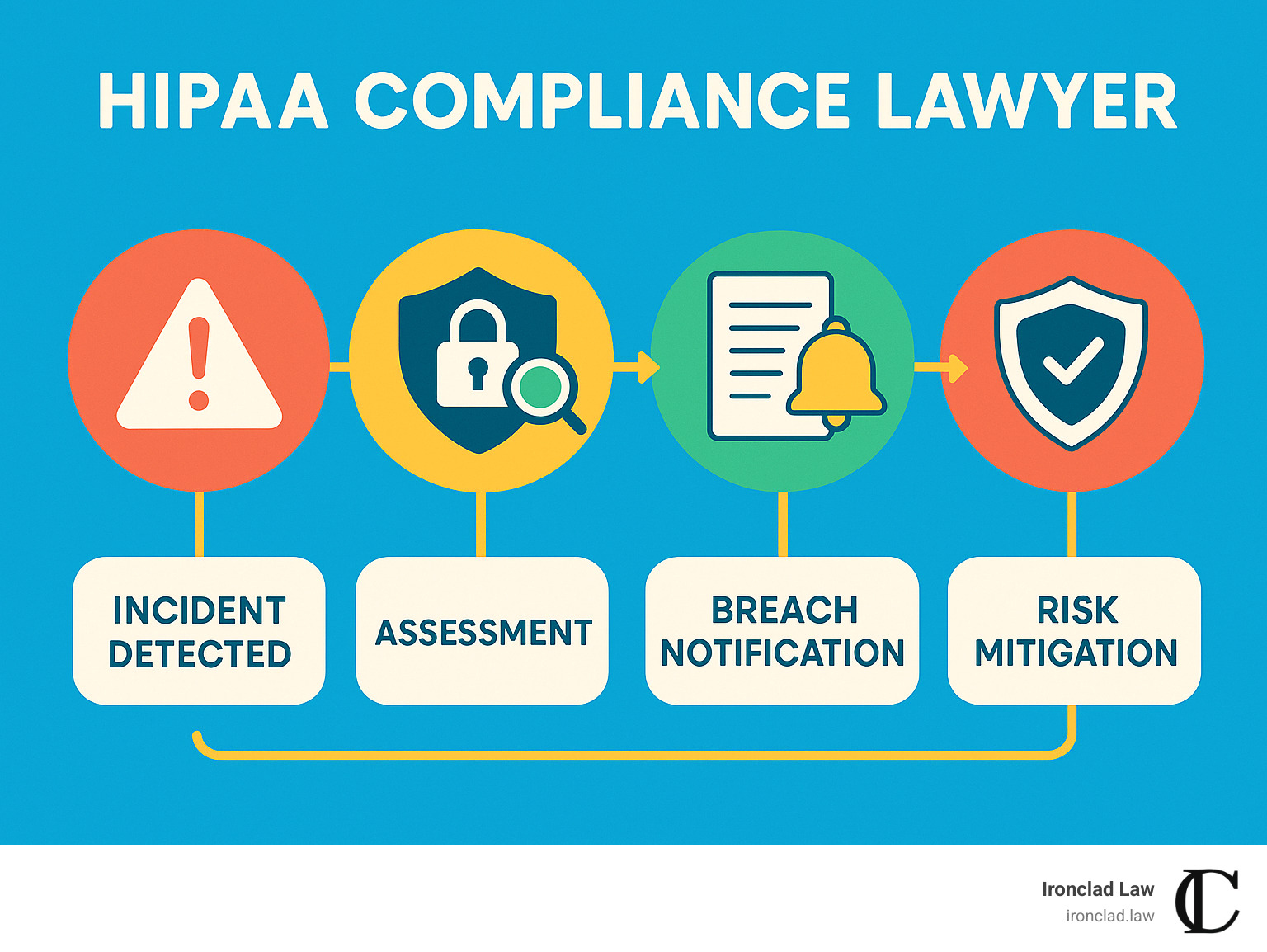
The reality is that compliance never sleeps. Organizations move through predictable phases: assessment and planning, implementation of policies and safeguards, training, ongoing monitoring, incident response, and continuous improvement.
Risk assessment forms the bedrock of everything else you’ll do. The Security Rule doesn’t just suggest this—it demands thorough risk analyses that get documented, updated regularly, and actually used to guide your security decisions. Too many organizations treat this as a checkbox exercise, but smart ones use it as their strategic roadmap.
When OCR investigations uncover problems, corrective action plans become your lifeline. These aren’t just bureaucratic exercises—they’re your chance to demonstrate genuine commitment to fixing issues and preventing future problems.
Breach response separates the prepared from the panicked. That 60-day notification clock starts ticking the moment you find a breach, and there’s no pause button. Mistakes during this critical window can multiply your penalties significantly beyond whatever caused the original breach.
Business associate monitoring might be the most overlooked aspect of ongoing compliance. Many covered entities think their job ends when they sign a contract, but that’s actually where the real work begins.
The NIST Security Rule toolkit offers excellent technical guidance, but implementing those recommendations without legal oversight is like following a recipe without understanding why certain ingredients matter.
Pre-Incident: Building & Maintaining Compliance
Building solid compliance starts with policies that actually make sense for your organization. We’ve all seen those generic policy manuals that gather dust on shelves—they’re worse than useless because they create false confidence. Your policies need to reflect how your people actually work, not some theoretical ideal.
Encryption and technical safeguards require a delicate balance. Go too far in either direction and you either create security gaps or make systems so cumbersome that people find workarounds.
Vendor due diligence extends far beyond the initial contract signing. Think of business associate relationships like marriages—they require ongoing attention, regular check-ins, and honest communication about problems.
Our Regulatory Counsel & Compliance Services help organizations build compliance programs that actually work in the real world, not just on paper.
During an OCR Audit or Investigation
When that OCR letter arrives, your first instinct might be panic. That’s normal. Your second instinct should be to call experienced counsel before you respond to anything.
Data requests from OCR can be overwhelming in scope and complexity. The temptation is to dump everything you have and hope for the best, but that strategy often backfires. Careful document review and strategic responses can make the difference between a quick resolution and a prolonged investigation.
Legal privilege becomes crucial during investigations, but it’s not automatic. You need to understand what communications are protected, how to maintain that protection, and when asserting privilege might actually hurt your case.
Negotiation strategy matters more than most people realize. OCR investigators are human beings trying to do their jobs effectively. They respond well to organizations that demonstrate genuine commitment to compliance and cooperation with the process.
Post-Incident: Breach Notification & Mitigation
The 60-day notification timeline is unforgiving. We’ve seen organizations struggle with this deadline because they spent too much time trying to determine whether an incident qualified as a breach instead of preparing notifications while conducting their analysis.
Substitute notice procedures kick in when you can’t reach affected individuals directly. These requirements are surprisingly specific—website postings need particular language, media notifications must reach specific audience sizes, and timing matters for everything.
Reputation management often determines whether an organization survives a major breach intact. The legal requirements represent just the minimum—smart organizations coordinate their legal compliance with broader communication strategies to maintain stakeholder confidence.
| Comparison: Federal HIPAA vs Notable State Privacy Laws |
|---|
| HIPAA (Federal) – Applies to covered entities and business associates; focuses on healthcare information; enforced by HHS OCR |
| California CCPA/CPRA – Broader consumer privacy rights; applies to businesses meeting revenue/data thresholds; includes healthcare data |
| New York SHIELD Act – Data security requirements; breach notification obligations; covers personal information beyond health data |
| Illinois BIPA – Biometric information protections; private right of action; significant damages for violations |
Hiring Smart: Qualifications, Fee Models & FAQs
Finding the right hipaa compliance lawyer can feel overwhelming, especially when you’re already dealing with regulatory stress. The truth is, not every attorney who claims HIPAA expertise actually has the deep experience you need when things get serious.
I’ve seen too many organizations learn this lesson the hard way—hiring general business lawyers who promise they can “figure out” HIPAA compliance, only to find themselves in deeper trouble when an OCR investigation arrives.
Healthcare law focus should be your first filter. You want attorneys who live and breathe healthcare regulations, not someone who handles HIPAA cases between divorce proceedings and real estate closings. OCR investigation experience is equally crucial—ask specifically about recent enforcement cases, not just general compliance work.
Technical fluency has become non-negotiable in today’s digital healthcare environment. Your attorney needs to understand cloud computing, encryption standards, and mobile health applications. If they can’t explain how HIPAA applies to your telehealth platform or AI-powered diagnostic tools, keep looking.
Industry certifications like Certified Information Privacy Professional (CIPP) aren’t required, but they show commitment to staying current. Healthcare privacy law changes rapidly, and you need counsel who actively participates in continuing education rather than relying on outdated knowledge.
Watch out for red flags: attorneys who primarily practice other areas, firms that assign junior associates to handle complex HIPAA matters, or lawyers who can’t provide specific examples of recent OCR cases.
Fee structures vary widely, and understanding your options helps you budget appropriately while ensuring adequate legal support. The right model depends on your organization’s size, risk profile, and ongoing compliance needs.

Must-Ask Questions When Interviewing a HIPAA Compliance Lawyer
“How many OCR investigations have you handled in the past two years?” This question cuts straight to current, relevant experience. Follow up by asking about outcomes and what they learned from each case.
“Can you describe a recent case similar to our situation?” While maintaining attorney-client privilege, experienced counsel should be able to discuss their approach to similar matters. This reveals both their experience level and problem-solving methodology.
“How do you stay current with healthcare technology trends?” HIPAA compliance increasingly involves artificial intelligence, cloud computing, and mobile health applications. Your attorney should understand these technologies and their compliance implications.
“Who will actually work on our matter?” Many firms use junior associates for routine HIPAA work while charging senior attorney rates. Understand the team structure, billing arrangements, and level of partner involvement.
“How do you explain complex regulatory requirements to non-lawyer clients?” The best hipaa compliance lawyer can translate legal jargon into practical business guidance that your operational staff can actually implement.
For comprehensive compliance support that bridges legal expertise with practical implementation, explore our The Intersection of Law and Compliance: How a Compliance Attorneys Can Help services.
Typical Compensation Structures
Hourly billing remains the most common approach, with rates typically ranging from $300 to $600 per hour depending on attorney experience, geographic location, and matter complexity. This model works well for ongoing advisory relationships and unpredictable investigation support.
Flat-fee compliance packages offer cost predictability for comprehensive compliance reviews. These typically range from $3,000 to $15,000 depending on organizational size and complexity. Packages usually include policy review, gap assessment, and detailed remediation recommendations.
Breach response retainers provide immediate access to legal support when incidents occur. Given the strict 60-day notification timeline, having counsel already engaged can be crucial. Retainers typically range from $5,000 to $25,000.
Hybrid models combine flat fees for routine compliance work with hourly billing for complex investigations or unexpected issues. This approach provides cost predictability for regular activities while ensuring adequate resources for serious problems.
Frequently Asked Questions about HIPAA Legal Counsel
What if patients want to sue for HIPAA violations? Here’s something that surprises many healthcare providers: HIPAA itself doesn’t allow patients to sue for monetary damages. The federal law creates regulatory obligations but no private right of action. However, patients may pursue claims under state privacy laws, consumer protection statutes, or medical malpractice theories.
How long do OCR investigations last? Most OCR investigations take 12 to 18 months from initiation to resolution, though complex cases involving multiple violations or large organizations can extend longer. The timeline depends on violation scope, your organization’s size, and cooperation level.
How often should HIPAA training occur? While HIPAA doesn’t specify exact training frequencies, best practices recommend annual comprehensive training for all workforce members, with additional sessions when policies change or new employees join.
Can we handle HIPAA compliance without a lawyer? Technically yes, but it’s rarely wise given the complexity and consequences involved. The investment in professional legal guidance typically pays for itself by avoiding costly mistakes and enforcement actions.
What’s the difference between covered entities and business associates? Covered entities include healthcare providers, health plans, and healthcare clearinghouses that electronically transmit health information. Business associates are vendors, contractors, or other entities that handle PHI on behalf of covered entities. Both have HIPAA obligations, but the specific requirements differ.
Conclusion
When it comes to HIPAA compliance, you can’t afford to wing it. The regulations are too complex, the penalties too severe, and the reputational damage too lasting to rely on generic templates or well-meaning but inexperienced counsel. You need a hipaa compliance lawyer who understands both the letter of the law and the practical realities of running a healthcare business.
At Ironclad Law, we don’t just help you check compliance boxes—we build robust defense strategies that protect your organization from every angle. Our aggressive approach to HIPAA matters means we’re not satisfied with minimum compliance. We create comprehensive programs that can withstand OCR scrutiny while supporting your business operations.
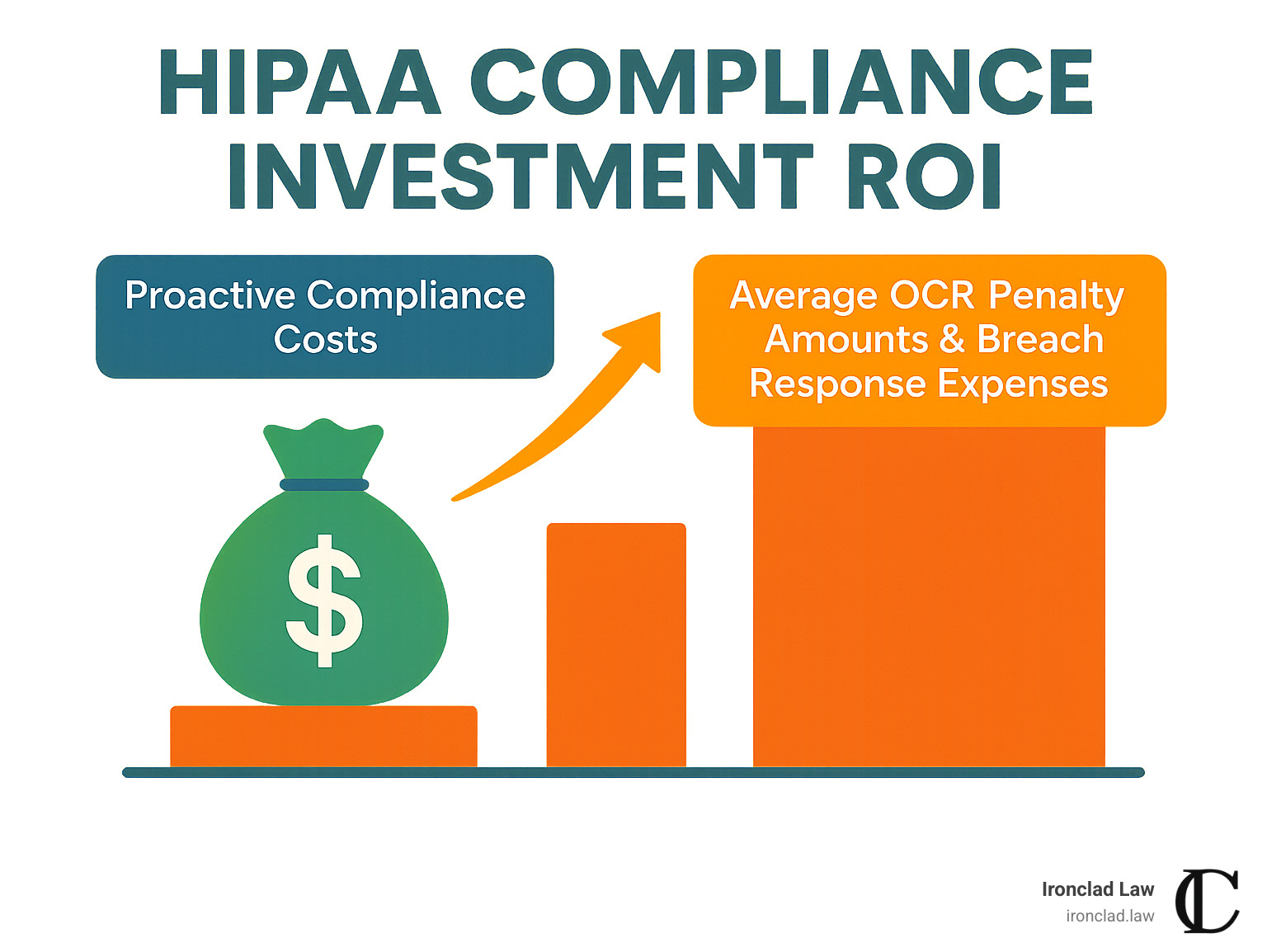
Think of HIPAA compliance as an investment, not an expense. The numbers tell the story clearly: building a solid compliance program typically costs between $10,000 and $50,000, depending on your organization’s size and complexity. Compare that to the millions in penalties we’ve seen OCR impose on organizations that waited too long to get serious about compliance.
Your next steps should be straightforward: Start by taking an honest look at where your organization stands today. Gather your current policies, review your business associate agreements, and check your training records. If you’re finding gaps—and most organizations do—that’s your signal to bring in professional help.
Don’t wait for an OCR investigation letter to land on your desk. Don’t wait for a data breach to expose your vulnerabilities. The best time to establish a relationship with qualified HIPAA counsel is before you desperately need one.
We’ve seen too many organizations learn this lesson the hard way. The healthcare executive who thought their IT vendor was handling everything. The medical practice that assumed their generic policies were sufficient. The startup that believed HIPAA didn’t apply to their innovative platform. They all wished they had acted sooner.
HIPAA compliance isn’t just about avoiding penalties—though that’s certainly important. It’s about protecting the trust your patients place in you every day. It’s about maintaining your competitive edge in an industry where privacy breaches make headlines. It’s about building a sustainable business that can grow without constantly looking over its shoulder.
In today’s interconnected healthcare environment, privacy and security aren’t nice-to-have features. They’re fundamental requirements for doing business. Every day you delay strengthening your compliance program is another day of unnecessary risk.
Ready to take control of your HIPAA compliance? Contact Ironclad Law today. We’ll bring the same aggressive advocacy to your compliance challenges that we bring to every legal matter. Because when it comes to protecting your organization, half-measures aren’t enough.
Learn more about our comprehensive Compliance Services and find how we can help transform your compliance program from a source of anxiety into a competitive advantage.