
You have 0 items in your cart

The Real Cost of Business Conflicts: More Than Just Money
Business dispute resolution refers to the various methods used to settle conflicts between businesses without necessarily going to court. When disputes arise, they can quickly drain resources, damage relationships, and distract from core operations.
Here’s what you need to know about business dispute resolution methods:
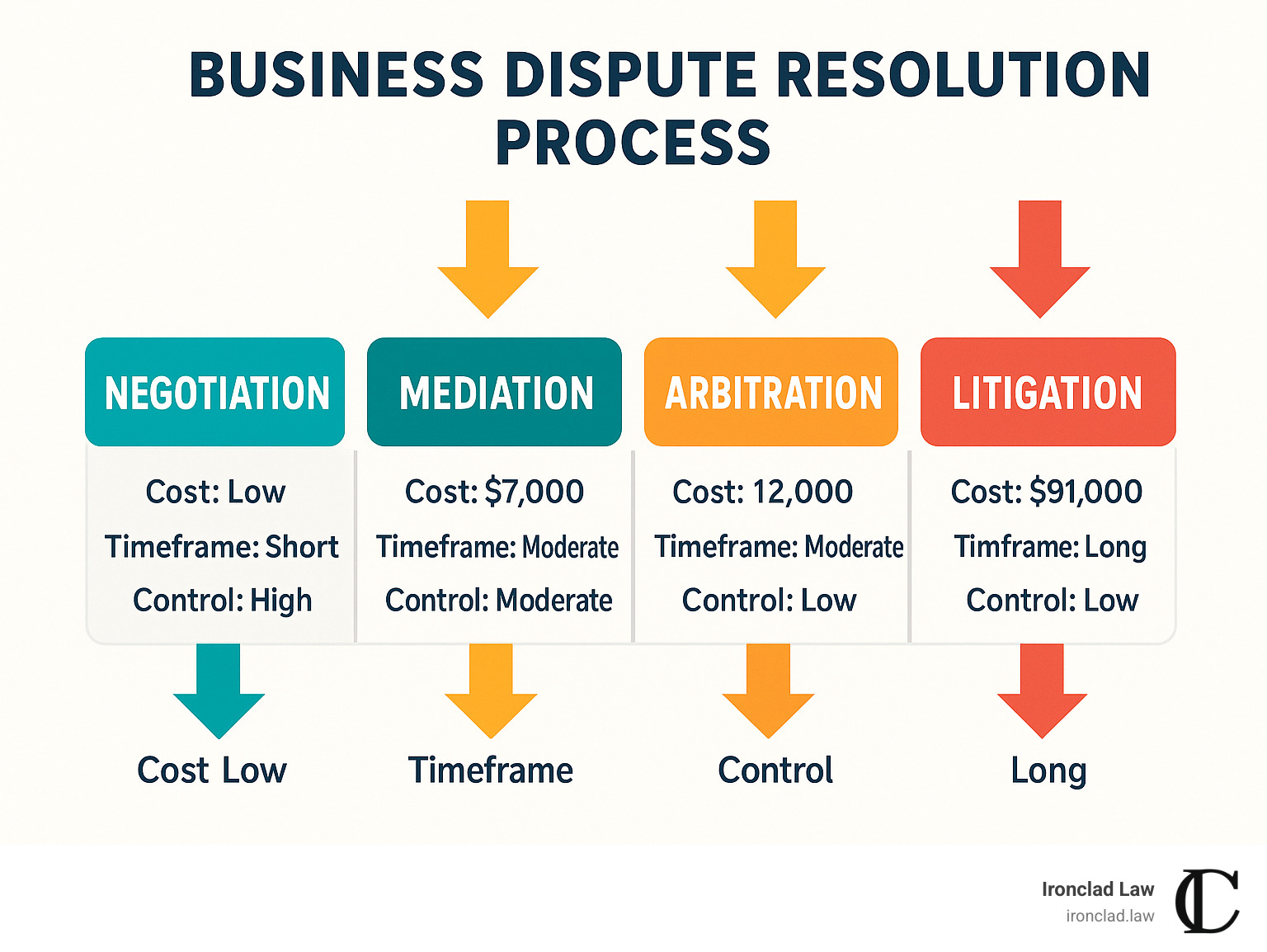
- Negotiation – Direct discussion between parties to reach agreement (fastest, least expensive)
- Mediation – Neutral third party helps facilitate a voluntary resolution ($7,000 average cost)
- Arbitration – Third-party arbitrator makes a binding decision ($12,000 average cost)
- Litigation – Formal court proceedings with a judge or jury ($91,000 average cost)
According to the American Bar Association, mediation resolves approximately 70-80% of business disputes without litigation, saving both time and money. Most businesses prefer alternative dispute resolution methods because they’re faster, more private, and preserve important business relationships.
In my years as a business attorney, I’ve seen countless disputes escalate unnecessarily when proper resolution channels weren’t used early enough. The financial toll is just the beginning – operational disruptions, reputational damage, and lost opportunities often prove far more costly in the long run.
As Michael Hurckes, Managing Partner at Ironclad Law, I’ve guided numerous clients through complex business dispute resolution processes, leveraging my experience in both litigation and corporate advisory roles to find efficient, cost-effective solutions to business conflicts.
Business Dispute Resolution: What It Is & Why It Saves You Money
When business relationships hit a rough patch, knowing how to steer conflicts can save your company significant time, money, and headaches. Business dispute resolution isn’t just legal jargon—it’s your toolkit for solving problems without breaking the bank.
Think of business dispute resolution as the full spectrum of ways to settle disagreements between your company and others, whether they’re partners, customers, employees, or suppliers. These range from a simple conversation over coffee to facing off in a courtroom, with several practical alternatives in between.
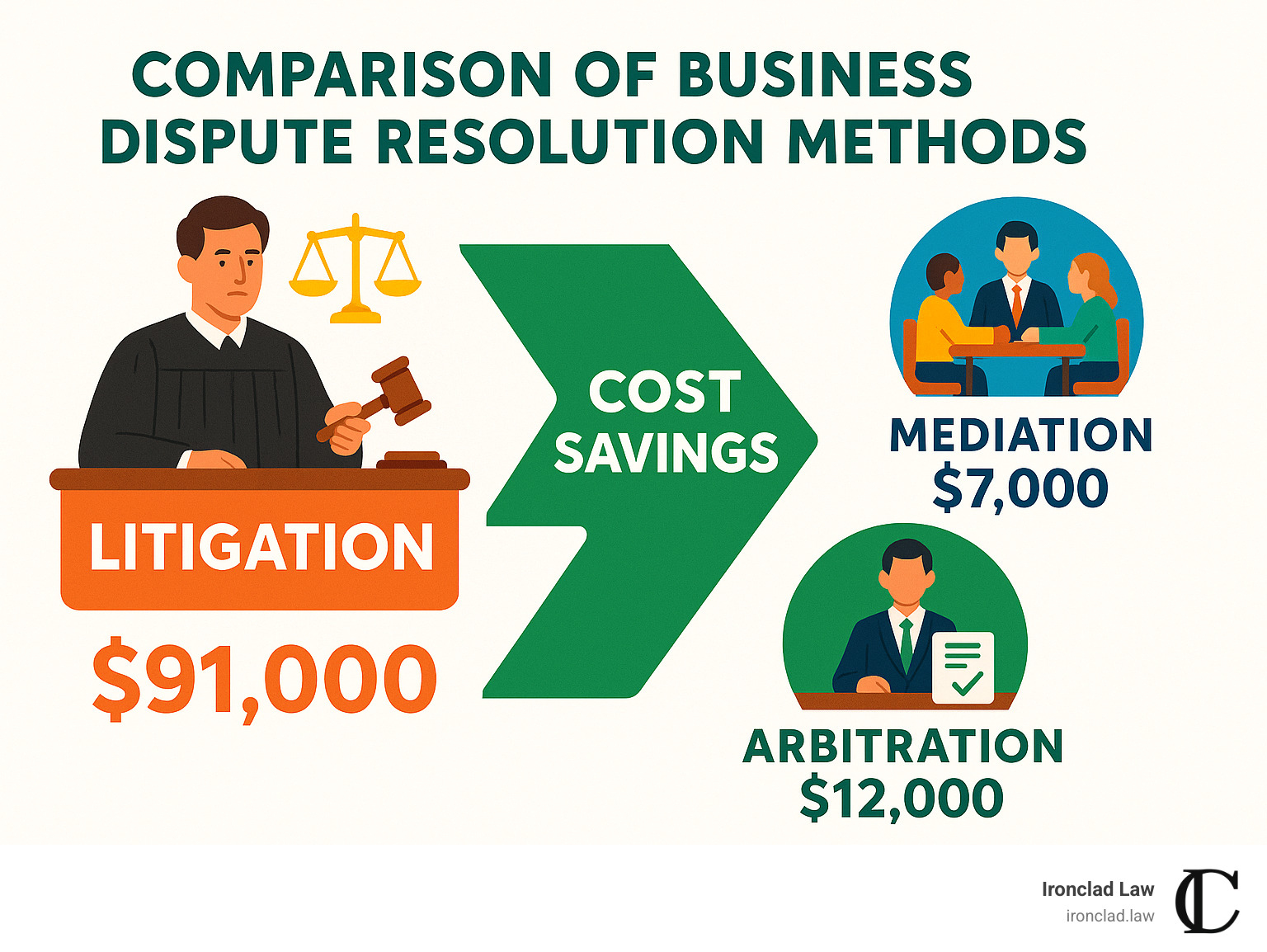
The financial case for choosing alternative dispute resolution (ADR) over litigation speaks for itself. While the average business lawsuit in America costs a whopping $91,000, mediation typically runs around $7,000, and arbitration about $12,000. That’s not just a small difference—it’s the kind of savings that can keep a small business afloat during tough times.
Money isn’t the only thing you’ll save, either. ADR methods offer several compelling advantages:
Party Control means you stay in the driver’s seat, rather than handing the keys to a judge who doesn’t know your business.
Confidentiality keeps your business matters private, unlike court proceedings which become public record (something your competitors would love to get their hands on).
Speed gets you back to business faster—a 2022 study by the International Mediation Institute found that 85% of businesses prefer mediation or arbitration precisely because they don’t want disputes dragging on for years.
Relationship Preservation focuses on solutions rather than blame, helping you maintain valuable business connections that might otherwise be destroyed in the adversarial court process.
Enforceability ensures that arbitration decisions carry legal weight, making them binding and enforceable in court if necessary.
At Ironclad Law, we’ve watched businesses save tens of thousands by addressing conflicts through ADR instead of immediately rushing to the courthouse. In fact, companies that include dispute resolution clauses in their contracts typically resolve disagreements 50% faster than those that don’t plan ahead.
The Most Common Business Disputes and Their Root Causes
Let’s face it – business conflicts are inevitable. As someone who’s helped countless companies steer these choppy waters, I’ve noticed certain disputes pop up time and again. Understanding these common flashpoints can help you prevent problems before they start or resolve them quickly when they do appear.
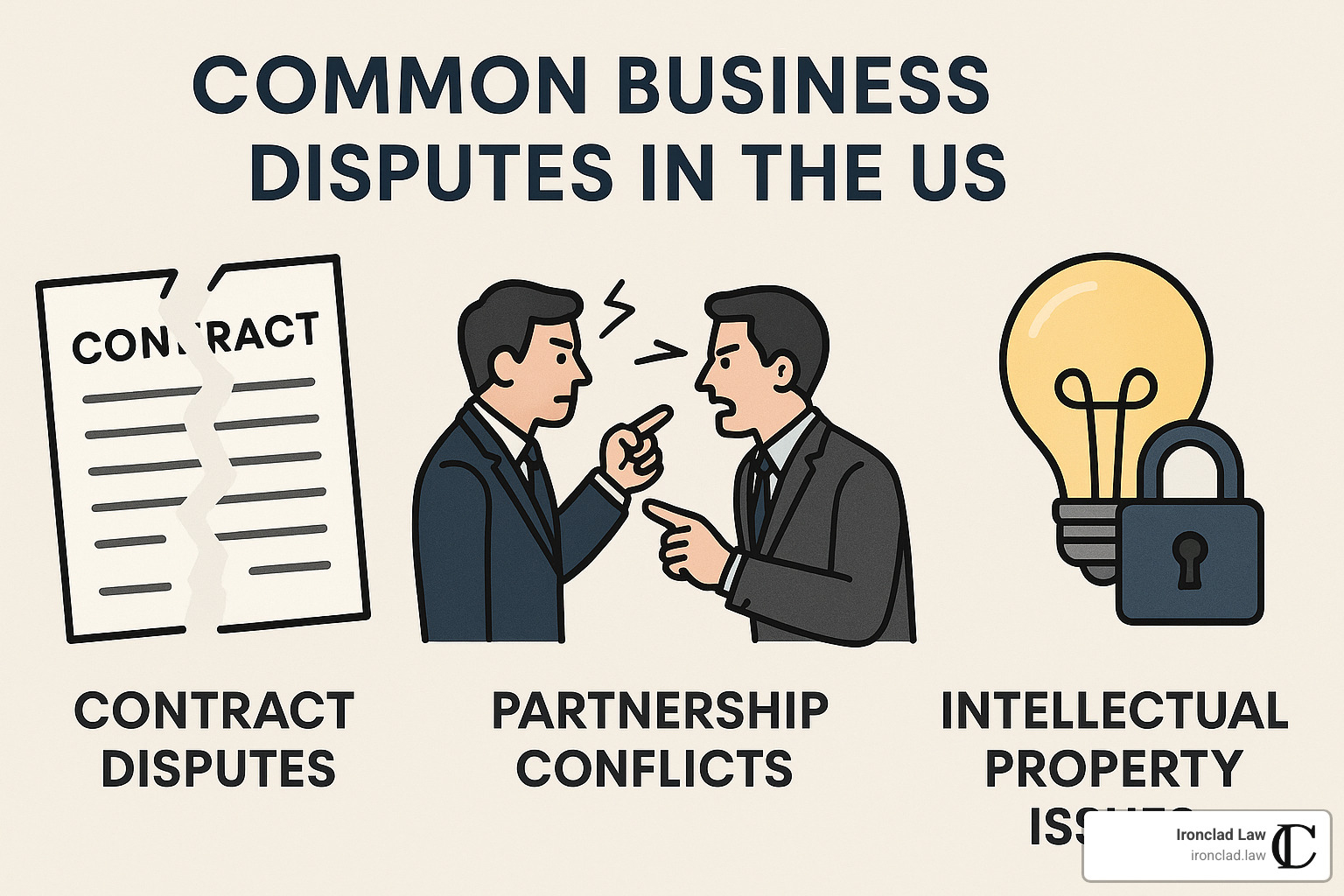
Breach of Contract
The backbone of business relationships is the humble contract – and when someone doesn’t hold up their end of the bargain, trouble follows. I’ve seen everything from missed payment deadlines to quality issues with products turning partnerships sour. Delivery failures, scope creep, and disagreements over termination terms are particularly thorny issues that can quickly escalate if not addressed properly.
Partnership and Shareholder Disputes
Even the closest business partners can find themselves at odds. These conflicts often start small – perhaps a disagreement about profit distribution or company direction – but can quickly snowball into serious problems. Decision-making authority disputes are particularly common, especially in growing companies where roles may become less clearly defined. I’ve also seen many conflicts arise around partner performance expectations and exit arrangements when someone wants to leave the business.
Intellectual Property Disputes
In today’s knowledge economy, your ideas are often your most valuable assets. Disputes over trademark infringement, patent rights, and trade secret misappropriation can threaten your company’s very foundation. These conflicts tend to be emotionally charged, as creators understandably feel personally invested in their intellectual property.
Employment Issues
Your team is your greatest resource, but employment relationships can sometimes go sideways. Discrimination claims, wage disputes, and wrongful termination allegations not only disrupt operations but can damage your company culture and reputation. Enforcement of non-compete agreements is another common battleground that requires careful navigation.
Breach of Fiduciary Duty
When someone has a legal obligation to act in another’s best interest but fails to do so, that’s a breach of fiduciary duty. These situations often involve conflicts of interest, self-dealing, or the misappropriation of opportunities that should have benefited the company. These breaches can be particularly devastating because they involve a fundamental betrayal of trust.
Supply Chain Breakdowns
The pandemic taught us all how fragile supply chains can be. Even in normal times, delivery delays, quality control issues, and price fluctuation disagreements can disrupt your operations and lead to heated disputes with suppliers and customers alike. These conflicts often involve complex contract interpretation questions that benefit from expert guidance.
Misrepresentation or Fraud
While most business disputes involve good-faith disagreements, sometimes more serious allegations arise. False statements during negotiations, concealment of important facts, or other deceptive practices can lead to claims of fraud that may have both civil and criminal implications.
By recognizing these common dispute patterns, you can implement preventative measures in your business practices and contracts. And when conflicts do arise, understanding their nature helps you select the most effective resolution approach.
Resolution Methods: Negotiation, Mediation, Arbitration & Litigation
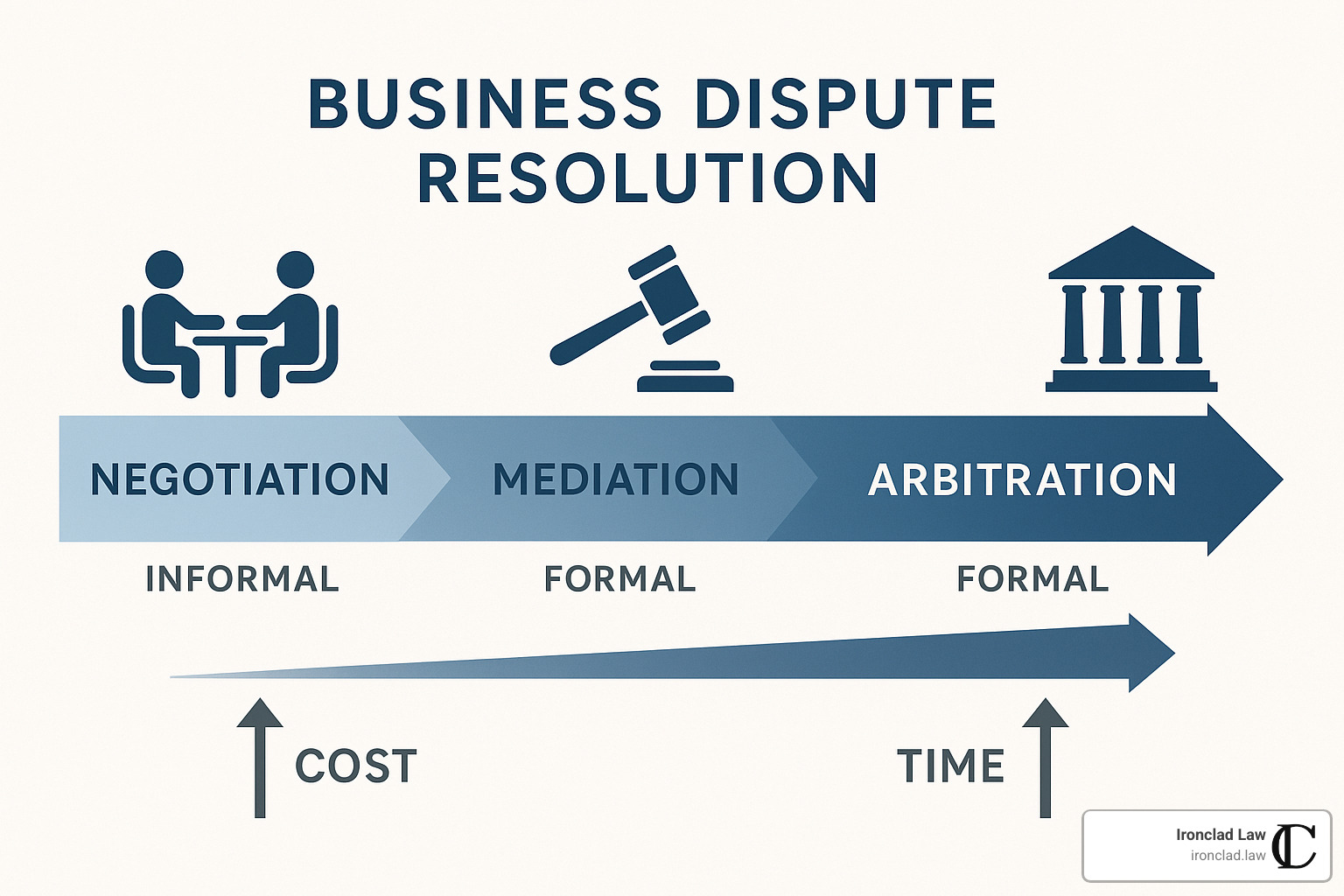
When your business faces a dispute, you’re standing at a crossroads with several paths forward. Think of these options as existing on a spectrum – from a friendly chat over coffee to a full-blown courtroom battle, with important middle ground in between.
Negotiation: First Line of Defense
Negotiation is where most reasonable resolution attempts begin – just you and the other party talking things through. It’s like fixing a misunderstanding with a friend before it becomes a bigger problem.
Negotiation costs little more than your time (and perhaps some legal advice), can wrap up in days rather than months, and keeps you firmly in control of the outcome. Best of all, when both sides approach negotiations with good faith, business relationships often emerge intact or even strengthened.
Before sitting down at the negotiation table, prepare your BATNA – your Best Alternative To a Negotiated Agreement. Knowing your fallback position gives you confidence and clarity. Focus on underlying interests rather than rigid positions, and always keep communication channels open. When you reach an agreement, get it in writing and have your attorney review it.
Mediation in Business Dispute Resolution
Sometimes you need a neutral third party to help guide the conversation. That’s where mediation shines. Think of a mediator as a skilled conversation facilitator who helps both sides see the situation more clearly without imposing their own decision.
Mediation typically costs between $3,000-$10,000 and can often be completed in just a few sessions. You maintain control over the final decision, and the process is designed to preserve important business relationships.
The numbers speak for themselves – Mediation resolves approximately 70-80% of business disputes without litigation. Why such success? Mediation creates a safe space for emotions to be expressed, focuses on underlying interests, allows for creative solutions a court couldn’t order, keeps sensitive information confidential, and helps preserve valuable business relationships.
At Ironclad Law, I’ve watched countless clients breathe sighs of relief after successful mediations that saved them months of stress and tens of thousands in legal fees. For specialized guidance, our Arbitration Lawyer page offers more resources.
Arbitration in Business Dispute Resolution
Arbitration sits in the middle ground between friendly mediation and formal litigation. It’s more structured than mediation but less rigid than court, with one or more neutral arbitrators hearing both sides before making a binding decision.
Costing around $10,000-$15,000 on average and typically concluding within 3-6 months, arbitration offers a reasonable middle path. While more adversarial than mediation, it’s still less relationship-damaging than dragging someone into court.
The beauty of arbitration lies in its flexibility and expertise. You can select arbitrators who actually understand your industry (unlike some judges who might not know the difference between SaaS and sauce). Proceedings remain private, protecting your business reputation and sensitive information. You can customize the rules to fit your situation, and thanks to the New York Convention, arbitration awards can be enforced in over 160 countries worldwide.
For businesses with complex contracts or international dealings, arbitration often makes the most sense. Check out our Business Contract Management services to learn how properly structured contracts can prevent disputes before they start.
Litigation: When the Gloves Come Off
Sometimes, you simply need the full authority of the court system. Litigation is the formal process of resolving disputes through the courts, resulting in a judgment by a judge or jury.
I won’t sugarcoat it – litigation is expensive ($50,000-$150,000+), time-consuming (typically 1-3 years), and often permanently damages business relationships. You also surrender much control to the court regarding both process and outcome.
That said, there are times when litigation is absolutely necessary: when you need to establish legal precedent, when public vindication matters, when the other party refuses to negotiate in good faith, when you need emergency relief, or when dealing with fraud or serious misconduct.
At Ironclad Law, our litigation team brings fierce advocacy when needed, but we’ll always be straight with you about costs, timelines, and potential outcomes. Your business objectives and bottom line remain our priority, even in the most heated courtroom battles.
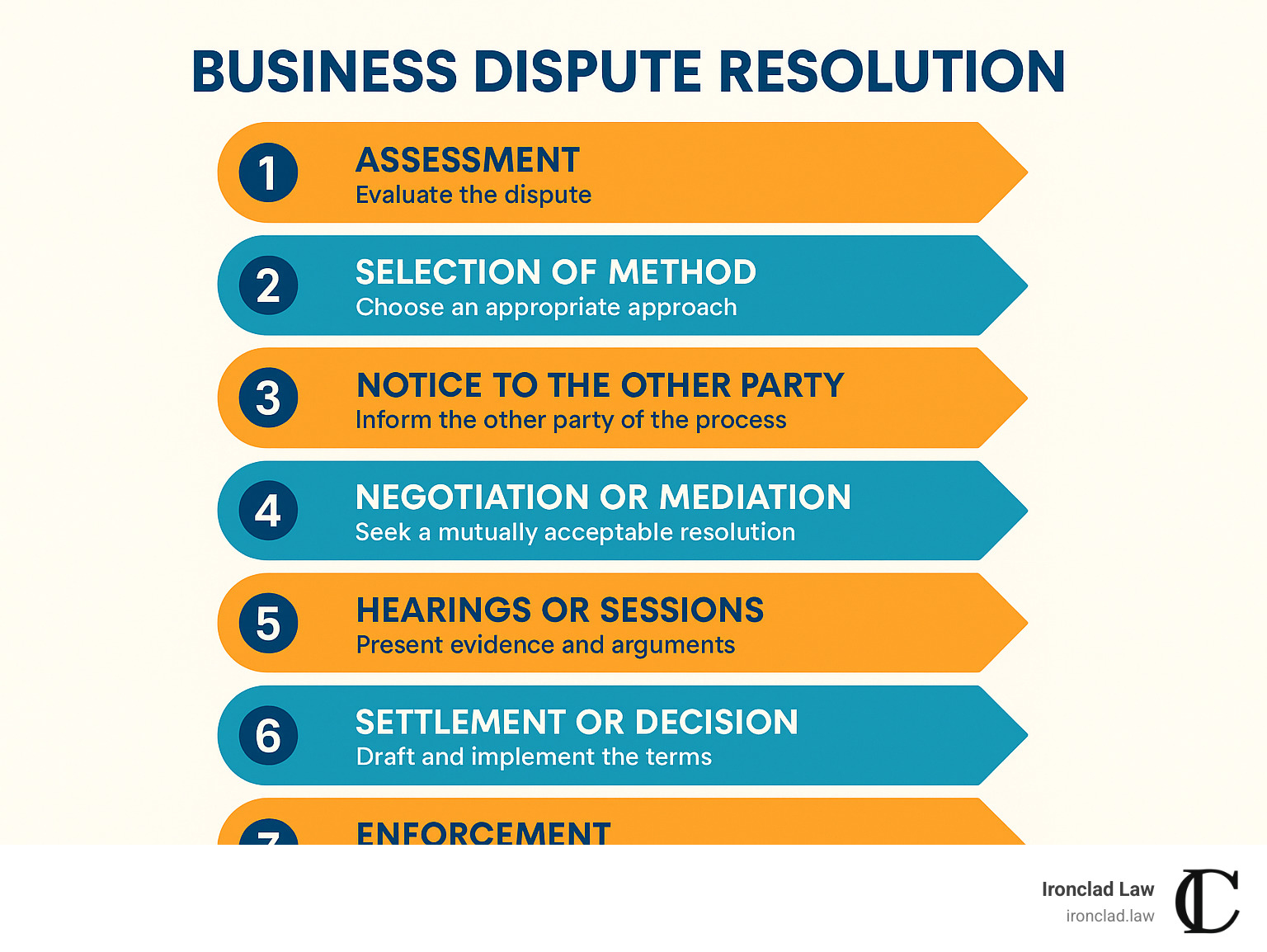
The Business Dispute Resolution Process: Step-By-Step Guide
When you’re facing a business dispute, having a clear roadmap can make all the difference. I’ve guided countless businesses through this journey, and I’ve found that a structured approach consistently leads to better outcomes – regardless of which resolution method you ultimately choose.
1. Early Assessment and Understanding the Problem
Start by taking a deep breath and looking at the situation objectively. What’s really happening here? Review your contracts and relevant documents carefully. Identify the core issues at stake – both the obvious ones and those lurking beneath the surface.
This is also the time to honestly assess your position’s strengths and weaknesses. How strong is your case? What evidence supports your view? And perhaps most importantly, what’s the real value of the relationship at stake?
2. Collect and Organize Evidence
Think of yourself as a detective at this stage. Gather every relevant document, email, text message, and record related to the dispute. Talk to witnesses and stakeholders who can provide insights into what happened.
Create a timeline of events to help organize your understanding. This chronological view often reveals patterns or turning points you might otherwise miss. Keep everything carefully organized – you’ll thank yourself later when you need to quickly reference a specific document during negotiations.
3. Choose the Appropriate Resolution Method
Now comes a critical decision point. Based on your assessment, which resolution path makes the most sense? Consider factors like cost, timeline, relationship importance, and your desired outcome.
Check your contracts – they may already specify a particular dispute resolution process. This is also the perfect time to consult with legal counsel about your options. Business dispute resolution doesn’t have to follow a single path; you might start with negotiation and move to mediation only if necessary.
4. Select a Neutral Third Party (if applicable)
If you’re pursuing mediation or arbitration, choosing the right neutral is crucial. Look for someone with relevant industry expertise who understands your business context. Check their credentials and experience, and ensure they have no conflicts of interest that might compromise their neutrality.
The mediator or arbitrator’s style matters too – some are more facilitative, while others take a more evaluative approach. Find someone whose approach aligns with your needs.
5. Conduct Hearings or Sessions
Preparation is everything when it comes to the actual resolution sessions. Know your case inside and out, but equally important is your ability to listen actively to the other side. Understanding their perspective doesn’t mean agreeing with it – but it does open doors to potential solutions.
Stay professional even when emotions run high. Focus on interests rather than positions, and keep the conversation moving toward potential solutions rather than dwelling on past grievances.
6. Draft and Implement Settlement or Decision
When you reach a resolution, make sure it’s captured clearly and comprehensively in writing. The settlement document should spell out specific obligations, timelines, and what happens if someone doesn’t follow through. Address confidentiality requirements if needed, and create a concrete implementation plan.
Vague settlements lead to future disputes, so be specific. “Payment within 30 days” is better than “prompt payment,” and “delivery of 500 units meeting X specifications by September 1” beats “timely delivery of product.”
7. Enforcement and Compliance
Your work isn’t done when the ink dries on the settlement. Monitor compliance with the agreement terms and document whether each party is fulfilling their obligations. Address any hiccups promptly before they grow into new disputes.
If necessary, be prepared to take enforcement action – though in my experience, well-crafted settlements with clear terms typically result in voluntary compliance.
Throughout this entire process, communication is your most powerful tool. Document everything, maintain a professional tone even in difficult moments, and ensure all agreements are properly formalized.
Prevention, Documentation & When to Call the Pros
An ounce of prevention is worth a pound of cure—especially when it comes to business dispute resolution. After helping hundreds of businesses steer conflicts, I’ve seen how proper planning can save you enormous headaches down the road.
Preventative Measures
The best disputes are the ones that never happen. Clear contracts form your first line of defense against potential conflicts. When drafting agreements, use precise language that leaves little room for interpretation. Define all key terms, clearly outline performance expectations, and include specific payment schedules. The extra time spent addressing potential contingencies now can save you thousands later.
Dispute resolution clauses deserve special attention in your contracts. These provisions specify exactly how you’ll handle disagreements before they arise—when everyone’s still on friendly terms. A well-crafted clause will outline your preferred resolution method, establish the process for selecting neutral third parties, and set reasonable timelines for each step.
Don’t just file your contracts away and forget them. Schedule regular reviews of your ongoing business agreements, especially for long-term partnerships. As relationships evolve, so should your contracts. These reviews create natural opportunities to address small concerns before they balloon into major disputes.
Documentation: Your Best Friend in a Dispute
I’ve never had a client say, “I wish I had documented less.” Create a secure, centralized system for all your business records—contracts, emails, payment records, meeting notes, and performance data. When disputes arise, these records become invaluable.
Casual conversation where your vendor promised to waive a fee? Get it in writing. The verbal change order from your client? Document it immediately. In the heat of a dispute, memory becomes surprisingly selective, but documentation doesn’t lie.
Creating a Dispute-Resistant Culture
Beyond paperwork, fostering an open communication culture dramatically reduces dispute frequency. Encourage team members to raise concerns early and create clear channels for addressing issues before they escalate. Regular check-ins with key business partners help identify potential problems while they’re still manageable.
Consider conducting periodic legal risk audits to identify vulnerabilities in your operations. These reviews can spot potential compliance issues or contractual weaknesses before they become problems.
For thorough contract review services that can help bulletproof your agreements, visit our Contract Review page.
Small vs. Large Company Tactics
The right approach to dispute prevention varies with your company size. Small businesses should focus on efficient, cost-effective methods—fixed-fee mediation programs can be excellent for disputes under $100,000. Online dispute resolution platforms often provide affordable alternatives to traditional processes.
Larger organizations benefit from comprehensive dispute protocols and management training on early issue identification. Some establish internal ombuds programs or maintain relationships with trusted mediators in their industry. The investment pays dividends in reduced litigation costs.
When to Call the Professionals
While minor disputes can often be handled internally, certain situations demand professional legal help. As a rule of thumb, call an attorney when:
- Significant money is at stake
- Legal complexities arise that you don’t fully understand
- The other party lawyers up
- You need emergency relief like injunctions
- The dispute involves allegations of fraud
- You’re uncertain about your rights or obligations
The earlier you involve counsel, the more options you’ll have. At Ironclad Law, our Business Lawyer Consultation services help you assess your situation and develop the most strategic path forward—often saving you substantial money compared to waiting until the dispute escalates.

Frequently Asked Questions about Business Dispute Resolution
What’s the fastest way to resolve a business dispute?
Direct negotiation typically resolves disputes fastest—sometimes in days. If that stalls, mediation usually comes next, with most cases resolving in just 1-3 sessions. The golden rule? Address issues early, before positions harden and relationships sour.
Is arbitration legally binding?
Yes, arbitration decisions are legally binding and enforceable in court. Unlike mediation where parties must agree to a solution, arbitrators make final decisions that parties must follow. Appeals are extremely limited, which provides certainty but also means you’re generally stuck with the outcome.
When is litigation unavoidable?
While we generally recommend exploring alternative methods first, sometimes you need to head to court—particularly when you need emergency orders like injunctions, when fraud is involved, when the other party refuses good-faith negotiation, or when establishing a legal precedent matters to your business.
Conclusion
Business dispute resolution isn’t just about settling conflicts—it’s about protecting what matters most to your company. When handled strategically, effective dispute resolution safeguards your bottom line, preserves valuable business relationships, and keeps your operations running smoothly.
Think of dispute resolution as a business skill, not just a legal process. The companies that thrive understand this distinction and approach conflicts with both legal wisdom and business savvy.
Prevention remains your most powerful tool. Clear contracts with dispute resolution clauses can save you thousands of dollars and countless headaches down the road. When conflicts do arise—and they will—start with direct conversation before escalating to more formal methods. Each step up the dispute resolution ladder costs more money and time.
Always consider the relationship at stake. Sometimes, winning the battle but losing a valuable business partner isn’t winning at all. This is where mediation often shines, helping both sides find common ground while preserving working relationships.
Documentation might seem tedious, but those detailed records can make or break your case. The business owner who can produce complete records during a dispute holds a powerful advantage over one who can’t.
Perhaps most importantly, know when you’re in over your head. Some disputes require professional guidance from day one. At Ironclad Law, we’ve seen countless businesses try to handle complex disputes themselves, only to call us later when the situation has deteriorated and options have narrowed.
Our approach balances aggressive advocacy with practical business sense. We understand that you need solutions that protect your legal interests while supporting your business goals. Whether you need help with dispute prevention, mediation, arbitration, or litigation, we bring both legal expertise and business perspective to the table.
For ongoing legal support that helps prevent disputes before they start, consider our Outsourced General Corporate Counsel services. We’ll handle the legal complexities so you can focus on what you do best—building your business.
Don’t wait until a small disagreement becomes a costly legal battle. Contact Ironclad Law today to develop a proactive strategy for keeping disputes manageable and your business moving forward.