
You have 0 items in your cart

Understanding the Stakes of Business Litigation
Business litigation defense is the process of protecting your company from a lawsuit or legal dispute. It involves a strategic response, evidence gathering, settlement negotiations, and, if necessary, courtroom representation.
Key aspects of business litigation defense:
- Early intervention – Engaging counsel at the first sign of a dispute can prevent escalation and preserve options.
- Cost management – Litigation can range from $50,000 to over $1 million, requiring careful budget planning.
- Strategic planning – Most cases (over 90%) settle before trial, making negotiation skills critical.
- Risk mitigation – Proactive measures like strong contracts and clear policies reduce litigation exposure.
- Alternative paths – Mediation and arbitration often provide faster, less expensive resolutions than court.
Beyond the high costs, litigation is disruptive. It slows operations, diverts executives into depositions, exposes sensitive information through findy, and damages your reputation in public court filings.
The average case can last for years, with the findy phase alone consuming up to 70% of total legal costs.
But here’s the critical insight: The best defense starts before anyone files a complaint.
Companies with strong contracts, clear governance, and early dispute resolution significantly reduce their litigation risk. When conflicts arise, engaging experienced counsel immediately provides a major advantage in controlling the outcome.
The stakes are too high to wait. Whether you’re facing a breach of contract claim, a shareholder dispute, or allegations of business fraud, your response in the first 30 days often determines whether you’ll settle favorably or face years of costly litigation.
Common Battlegrounds: Types of Disputes That Escalate to Litigation

Business disputes come in many forms, but some types consistently escalate into litigation. Understanding these common battlegrounds is the first step in preparing your business litigation defense. Our experience in key markets like New York, Delaware, and California shows these issues can derail even robust operations.
Here are the most frequent types of business disputes we encounter:
- Breach of Contract: These claims arise when one party fails to fulfill their contractual obligations, such as a vendor failing to deliver goods. Disputes often hinge on interpreting contract terms and may involve related claims like breach of good faith. The Uniform Commercial Code (UCC) adds complexity to contracts for the sale of goods.
- Shareholder and Partnership Disputes: Internal conflicts among owners over management, resources, or control can destabilize a company. Allegations of fraud or mishandling assets are common. Breaching fiduciary duties, such as the high level of trust required under New York law, often leads to litigation.
- Intellectual Property Theft: As a company’s most valuable asset, IP must be protected. Litigation arises from the infringement of trademarks, copyrights, patents, or trade secrets by competitors, threatening a company’s market position.
- Employment Litigation: Disputes between employers and employees frequently lead to lawsuits. Common claims include discrimination, wrongful termination, harassment, wage violations, and whistleblower retaliation. These cases involve complex federal and state laws, often enforced by agencies like the EEOC. For more on internal conflicts, see our resources on More info about Corporate Litigation.
- Business Fraud: Devastating to a company’s reputation and finances, fraud involves intentional misrepresentation or concealment of facts to induce a transaction. These claims arise across many sectors and carry severe penalties.
- Tortious Interference: This occurs when a third party unlawfully interferes with a contract or business relationship, causing financial harm. Examples include a competitor poaching a client with false statements. Proving damages requires detailed financial evidence.
- Regulatory Enforcement: Businesses face a complex web of federal and state regulations. Enforcement actions for violations of consumer protection, environmental, or securities laws are common and increasing, particularly in areas like cryptocurrency. Federal agencies (SEC, CFTC, FinCEN) and state attorneys general are accelerating enforcement, which can lead to fines, asset forfeiture, and criminal charges. For help navigating these complexities, visit our page on More info about Regulatory Examinations & Enforcement Counsel.
Proactively Mitigating Your Risk
A proactive business litigation defense saves immense time, money, and stress by preventing disputes before they escalate.
- Strong Contracts: Clear contracts are your first line of defense, defining expectations, allocating risk, and setting dispute resolution methods. Include merger clauses and clear terms for IP, confidentiality, and performance.
- Clear Corporate Governance: Clear corporate governance minimizes internal conflicts by defining roles, responsibilities, and ethical guidelines. A Corporate Compliance Lawyer can help establish these critical frameworks.
- Employee Training: Regular training on company policies, ethical conduct, and legal compliance (e.g., anti-harassment, data privacy) can significantly reduce the risk of employment litigation.
- Insurance Review: Periodically review your insurance policies (e.g., D&O, E&O, general liability) to ensure adequate coverage for potential litigation risks.
- Document Retention Policies: Implement and adhere to clear document retention policies. This ensures relevant records are preserved, which is critical if litigation arises.
When Disputes Arise: Early Warning Signs
Recognizing early warning signs is crucial for an effective business litigation defense.
- Demand Letters: A formal letter from another party’s attorney outlining their grievance and demanding action.
- Cease and Desist Notices: Often used in IP cases, these demand that you stop certain activities.
- Employee Complaints: Unresolved grievances from employees can be precursors to litigation.
- Partner Disagreements: Persistent disagreements among owners, especially over finances or management, should be addressed immediately.
- Vendor Payment Issues: Recurring disputes over payments or services with key vendors or clients.
When you see these red flags, act immediately. Engaging legal counsel early streamlines dispute resolution and minimizes the chance of a trial. Waiting narrows your options, so don’t hesitate to Get a Business Lawyer Consultation immediately.
The Anatomy of a Lawsuit: Key Stages of a Business Litigation Case
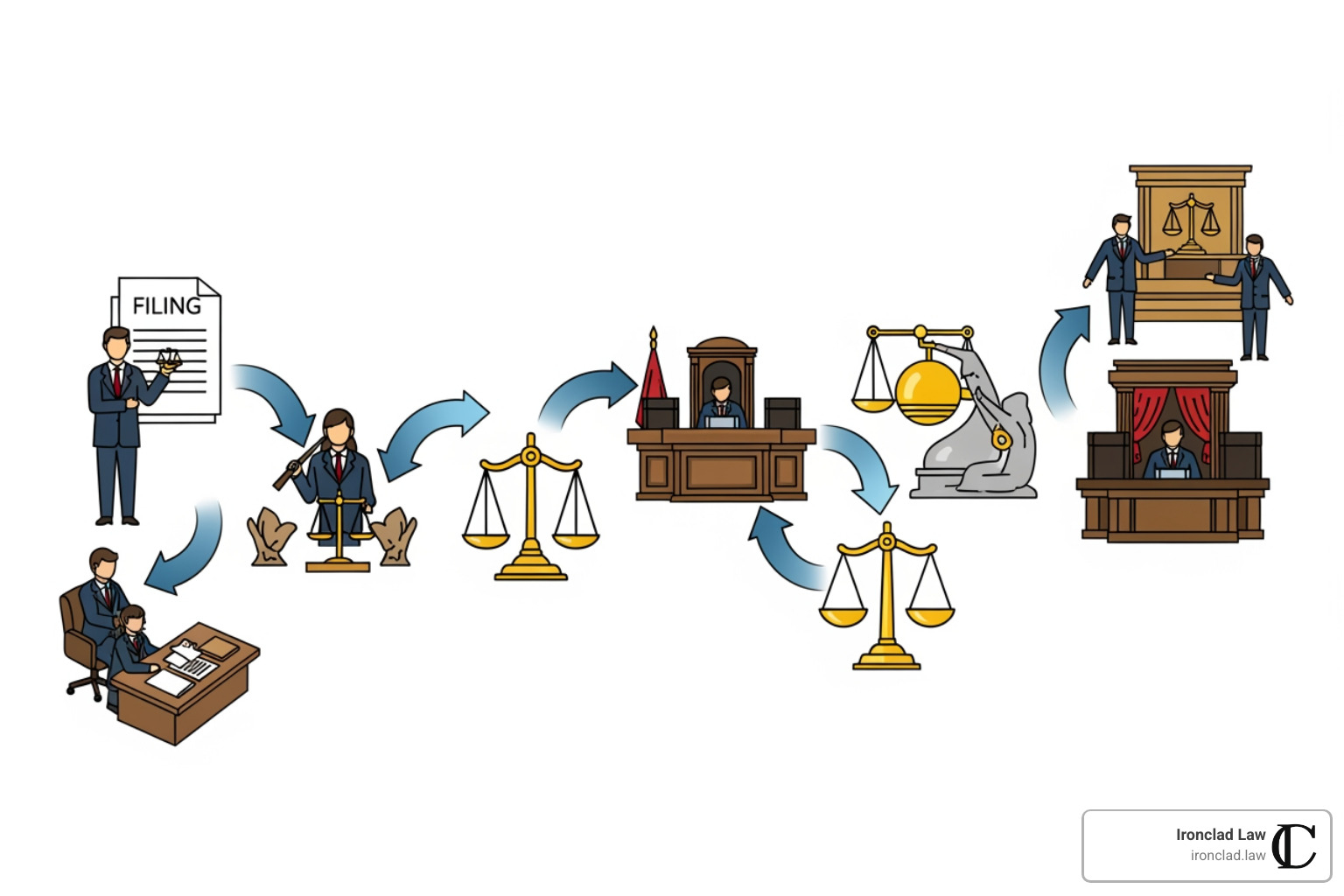
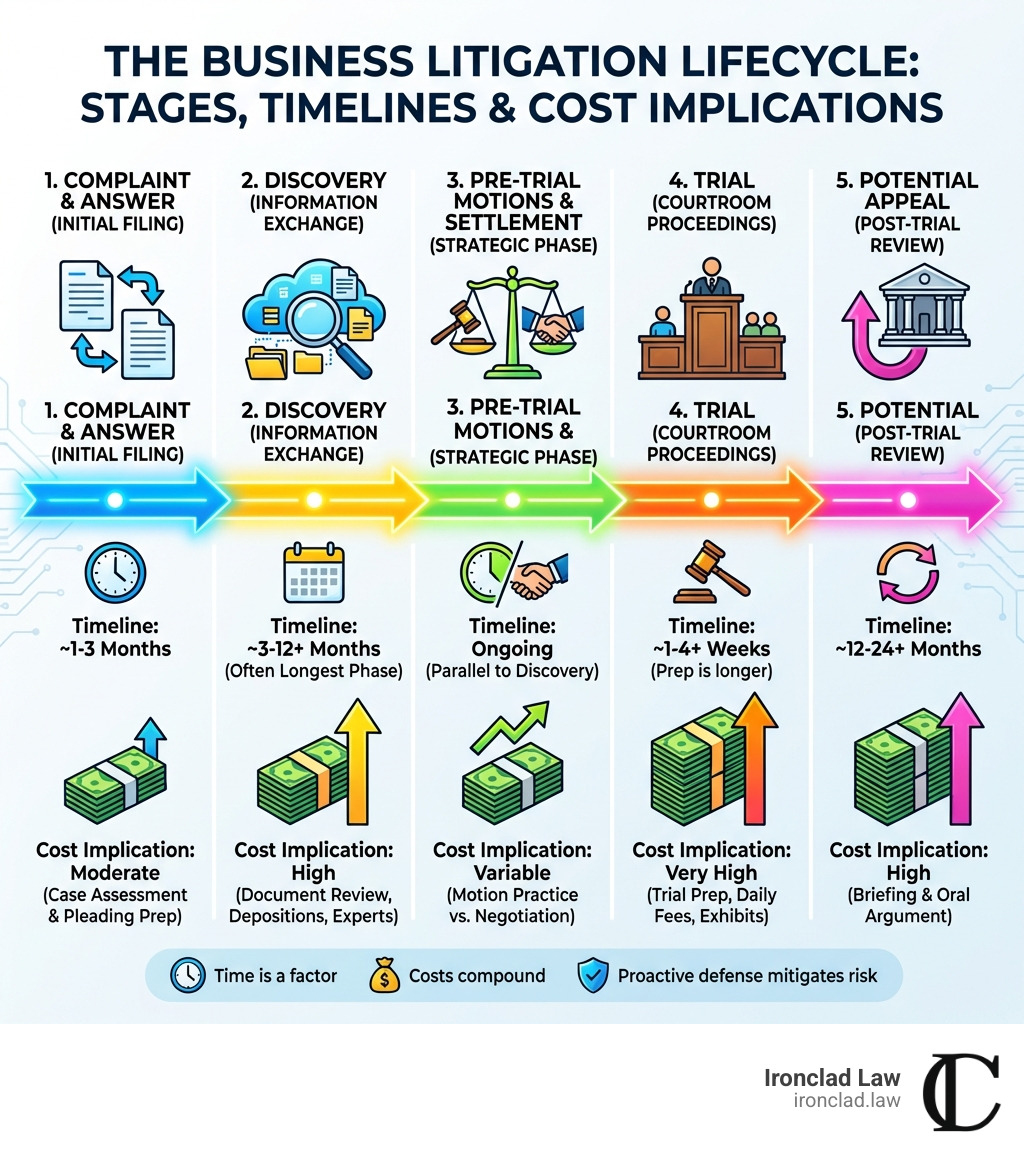
Understanding the lifecycle of a lawsuit is essential for an effective business litigation defense. Cases generally follow a predictable path in both federal and state courts. Cornell Law defines litigation as “the process of resolving disputes by filing or answering a complaint through the public court system.”
Here are the key stages we typically steer:
- Pleadings (Complaint & Answer): A lawsuit begins when a plaintiff files a “complaint.” We then prepare an “answer” responding to each allegation and asserting any counterclaims. This phase establishes the legal and factual basis for the dispute.
- Findy: This is the most time-consuming and expensive phase, accounting for up to 70% of litigation costs. Both sides exchange information and evidence, allowing us to gather the facts needed to build your defense.
- Motions: Throughout the process, either party can file motions asking the court to make specific rulings that can resolve parts of or even the entire case.
- Pre-trial Conferences: Judges often hold conferences to discuss case status, explore settlement, and set timelines for findy and trial.
- Trial: If a settlement isn’t reached, the case proceeds to trial, involving evidence, witness testimony, and arguments before a judge or jury. We pride ourselves on actively trying cases when necessary.
- Appeal: If either party is dissatisfied with the trial outcome, they may appeal to a higher court.
Federal courts operate under the Federal Rules of Civil Procedure, while state courts have their own rules. Jurisdiction often depends on the nature of the claim. For instance, disputes involving activities across state lines might fall under federal jurisdiction due to the U.S. Constitution and interstate commerce clause. For a foundational understanding, you can explore What is litigation?.
The Critical Findy Phase
The findy phase is a structured process for uncovering all relevant facts and evidence. The four main types of findy requests are:
- Interrogatories: Written questions sent to the opposing party, which must be answered under oath.
- Requests for Production: Demands for documents, electronic data, and other tangible evidence. This is where e-findy challenges often arise.
- Depositions: Out-of-court sworn testimony taken from witnesses and parties involved in the case.
- Requests for Admissions: Written statements that the opposing party is asked to admit or deny, helping to narrow disputed facts.
Protecting sensitive information during findy is paramount. We use strategies like objecting to unreasonable requests, asserting attorney-client privilege, redacting information, negotiating secrecy agreements, and submitting information under seal. This strategic management is a core part of More info about our dispute services.
The Role of Motions
Motions are formal requests made to the court for a specific ruling. They are powerful tools in a business litigation defense and can significantly influence a case’s trajectory.
- Motion to Dismiss: Filed early, this motion asks the court to dismiss a lawsuit for failing to state a valid legal claim or for other procedural issues. We can use it to dismiss frivolous lawsuits before trial.
- Motion for Summary Judgment: Filed after findy, this motion asks the court for a ruling when there are no disputed material facts, entitling one party to win as a matter of law. This can avoid a costly trial.
Strategic use of motions can control the case narrative, narrow issues, and lead to an early, favorable resolution.
Winning the War: Strategies for Effective Business Litigation Defense
When facing a lawsuit, your business litigation defense isn’t just about reacting; it’s about strategizing, anticipating, and aggressively pursuing the best outcome. Like a game of chess, every move matters.
Here are some key strategies we employ:
- Early Case Assessment: As soon as a dispute arises, we conduct a thorough assessment to understand the facts, identify legal issues, evaluate liabilities, and estimate costs. This allows us to develop a custom legal strategy aligned with your business goals.
- Developing a Defense Narrative: We work with you to craft a compelling narrative that highlights your position, explains your actions, and undermines the plaintiff’s claims. This story guides our strategy from findy to trial.
- Aggressive Negotiation: Our readiness to go to trial provides significant leverage in negotiations. Our reputation as fierce negotiators often compels opposing parties to consider reasonable settlements.
- Trial Readiness as Leverage: Many firms avoid trial. We don’t. Our philosophy is that being prepared and willing to take a case to court puts us in a stronger negotiating position. The other side knows we mean business.
- Cost-Benefit Analysis: Throughout the process, we continuously evaluate the financial and operational impact of different legal strategies, always aiming for the best, most cost-effective outcome.
The Importance of an Aggressive Business Litigation Defense
An aggressive business litigation defense is about being strategic, proactive, and relentless in protecting your interests.
- Controlling the Narrative: An aggressive defense allows us to shape the story, presenting your company in the best light and countering negative portrayals by the plaintiff.
- Exposing Weaknesses in the Plaintiff’s Case: Through rigorous findy and strategic motions, we aim to uncover flaws, inconsistencies, or lack of evidence in the plaintiff’s arguments.
- Forcing Favorable Settlements: When the opposing side sees a strong, well-resourced, and trial-ready defense, they are more inclined to negotiate a favorable settlement.
- Preparing to Win at Trial: While most cases settle, we always prepare as if we’re going to trial. This meticulous preparation is central to our philosophy of More info about Business Dispute Resolution.
Choosing Your General: Benefits of Experienced Business Litigation Attorneys
When your business is facing a legal battle, your choice of legal team can make all the difference.
- Industry Knowledge: Our attorneys have deep knowledge across diverse industries, from finance and tech to healthcare. This allows us to understand your business’s unique nuances and craft a strategy that prevents future disputes.
- Courtroom Experience: Unlike firms that avoid trial, we are true trial lawyers with decades of experience winning complex cases. This track record gives us a distinct edge in both negotiation and litigation.
- Strategic Thinking: We anticipate legal challenges, not just react to them. Our team includes former federal prosecutors and judicial clerks, giving us unique insight into opposing strategies and allowing us to develop innovative solutions for complex disputes.
- Resource Management: We manage cases efficiently, using cutting-edge technology and e-findy solutions to reduce costs. We also offer alternative fee arrangements, such as fixed fees or success fees, to manage costs effectively.
- Objective Advice: In the thick of a dispute, emotions can run high. We provide clear, objective advice to help you make informed decisions for the long-term interest of your business.
For startups and established businesses alike, choosing the right legal partner is paramount. For more on what to look for, explore The Startups Legal Lifeline: What to Look For in a Business Attorney.
Exploring Alternatives and Counting the Costs
The potential outcomes of business litigation are varied, and the costs can be substantial. Understanding these factors is crucial for an informed business litigation defense.
Potential Outcomes of Business Litigation:
- Settlement: Over 90% of civil cases are resolved through settlement before trial. This saves time and money, preserves confidentiality, and allows parties to control the outcome.
- Dismissal: A lawsuit might be dismissed by the court due to lack of legal merit or through a successful motion to dismiss or for summary judgment.
- Trial Verdict: If a case goes to trial, a judge or jury will render a verdict. This is a high-risk scenario with an uncertain outcome.
- Appeal: Following a trial, either party may appeal the decision to a higher court, leading to further proceedings.
Associated Costs:
Commercial litigation costs can range from $50,000 to over $1 million, with findy accounting for up to 70% of the total. Expenses include attorney and expert witness fees, court costs, and e-findy. To manage these costs, we offer alternative fee arrangements like fixed fees, fee caps, or success fees.
The Strategic Role of Alternative Dispute Resolution (ADR)
Alternative Dispute Resolution (ADR) offers valuable, cost-effective, and faster ways to resolve disputes outside of court.
- Mediation: A neutral mediator facilitates discussions to help parties find common ground and reach a mutual settlement. The mediator does not impose a decision.
- Arbitration: A neutral arbitrator hears evidence and renders a binding decision, similar to a judge. Proceedings can occur before organizations like JAMS or the American Arbitration Association (AAA). For specific guidance, you might need a dedicated Find an Arbitration Lawyer.
- Negotiation: Direct discussions between the parties, often through their legal counsel, aimed at reaching a settlement.
Benefits of ADR:
- Cost-Effectiveness: ADR is generally less costly than litigation, avoiding expensive trial preparation and court appearances.
- Speed and Efficiency: ADR is much faster than litigation, allowing businesses to resolve disputes efficiently and move forward.
- Confidentiality: Unlike public court proceedings, ADR processes are typically confidential, protecting sensitive business information.
- Control Over Outcome: In mediation, parties retain control over the final agreement. In arbitration, parties have more input than in court.
- Preservation of Relationships: The less adversarial nature of ADR can help preserve business relationships, which is valuable if parties must continue working together.
When ADR is Appropriate:
ADR is particularly beneficial when a contract mandates it, both parties are open to compromise, confidentiality is a priority, or a faster resolution is desired.
| Feature | Traditional Litigation | Alternative Dispute Resolution (ADR) |
|---|---|---|
| Cost | High (typically $50k to over $1M) | Lower (often significantly less than litigation) |
| Time | Long (months to several years) | Shorter (weeks to months) |
| Privacy | Public record | Private and confidential |
| Outcome Control | Judge/Jury decides | Parties control (mediation) or arbitrator decides (arbitration) |
| Relationship Impact | Often adversarial, damages relationships | Can be less adversarial, may preserve relationships |
Frequently Asked Questions about Business Litigation Defense
When should my business hire a litigation defense attorney?
You should hire a litigation attorney as soon as you suspect a dispute could lead to a lawsuit. Early engagement is critical for an effective business litigation defense.
- As soon as a dispute arises: Consulting an attorney can help de-escalate the situation or prepare a proactive strategy.
- Receiving a demand letter: This is a clear signal that the other party is pursuing legal action. Your immediate response can significantly impact the outcome.
- Being served with a complaint: Once served, deadlines are tight, and immediate legal action is required to protect your rights.
- To proactively assess risk: An attorney can review your contracts and policies to identify and mitigate potential litigation risks before they materialize.
Waiting too long limits your options and increases costs. Don’t hesitate to Get Law Firm Advice at the first sign of trouble.
What is the difference between business litigation and corporate litigation?
While often used interchangeably, these terms have a key distinction:
- Business Litigation: This is a broad term for any legal dispute involving a business, including contracts, IP, employment, and fraud.
- Corporate Litigation: This is a specific subset focusing on disputes related to a corporation’s internal governance, structure, and the duties of its officers, directors, and shareholders.
Essentially, all corporate litigation is business litigation, but not all business litigation is corporate litigation.
How can I protect my company’s confidential information during a lawsuit?
Protecting sensitive information during the findy phase is a major concern. We employ several strategies to safeguard your data:
- Protective Orders: We can seek a court order that restricts how confidential information exchanged during findy can be used and disclosed.
- Confidentiality Agreements: Parties can enter into agreements that govern the handling of sensitive documents and data.
- Redacting Sensitive Data: We carefully review documents and redact (black out) information that is irrelevant or privileged.
- Asserting Attorney-Client Privilege: Communications between your business and your legal counsel are generally protected from disclosure.
- Submitting Under Seal: In some cases, highly sensitive information can be submitted to the court “under seal,” keeping it from the public record.
These measures help ensure your trade secrets and proprietary data are not exposed during litigation. For comprehensive guidance on your company’s legal needs, explore More info about our General Counsel services.
Conclusion: Fortify Your Business with a Bulldog Defense
Navigating the complexities of business litigation can feel like a daunting task, but with a proactive mindset and the right legal team, your business can weather any storm. We’ve explored the common types of disputes, the stages of a lawsuit, and the critical strategies for an effective business litigation defense.
The best defense begins long before a complaint is filed—with strong contracts, clear governance, and an eye for early warning signs. When disputes do arise, an aggressive, strategic defense is paramount. It’s about more than just reacting; it’s about controlling the narrative, exposing weaknesses in the opposition’s case, and leveraging your readiness to go to trial to force favorable settlements.
At Ironclad Law, we believe litigation is a business tool, and we wield it fiercely on behalf of our clients. Our “bulldog” approach means we don’t back down. We love to go to trial, and our fierce advocacy ensures that we fight tirelessly for your rights, whether in negotiation or in the courtroom. With our experienced attorneys in the United States, including New York, Delaware, and California, we are equipped to provide the strategic counsel and aggressive representation your business needs.
Don’t let legal challenges define your company’s future. Protect your business with a strategic defense plan and let us stand as your unwavering shield.