
You have 0 items in your cart

Why Smart Entrepreneurs Start with Strong Legal Foundation

Legal services for entrepreneurs are the invisible backbone that separates thriving businesses from costly failures. From entity formation to intellectual property protection, the right legal support helps you avoid expensive mistakes and build a solid foundation for growth.
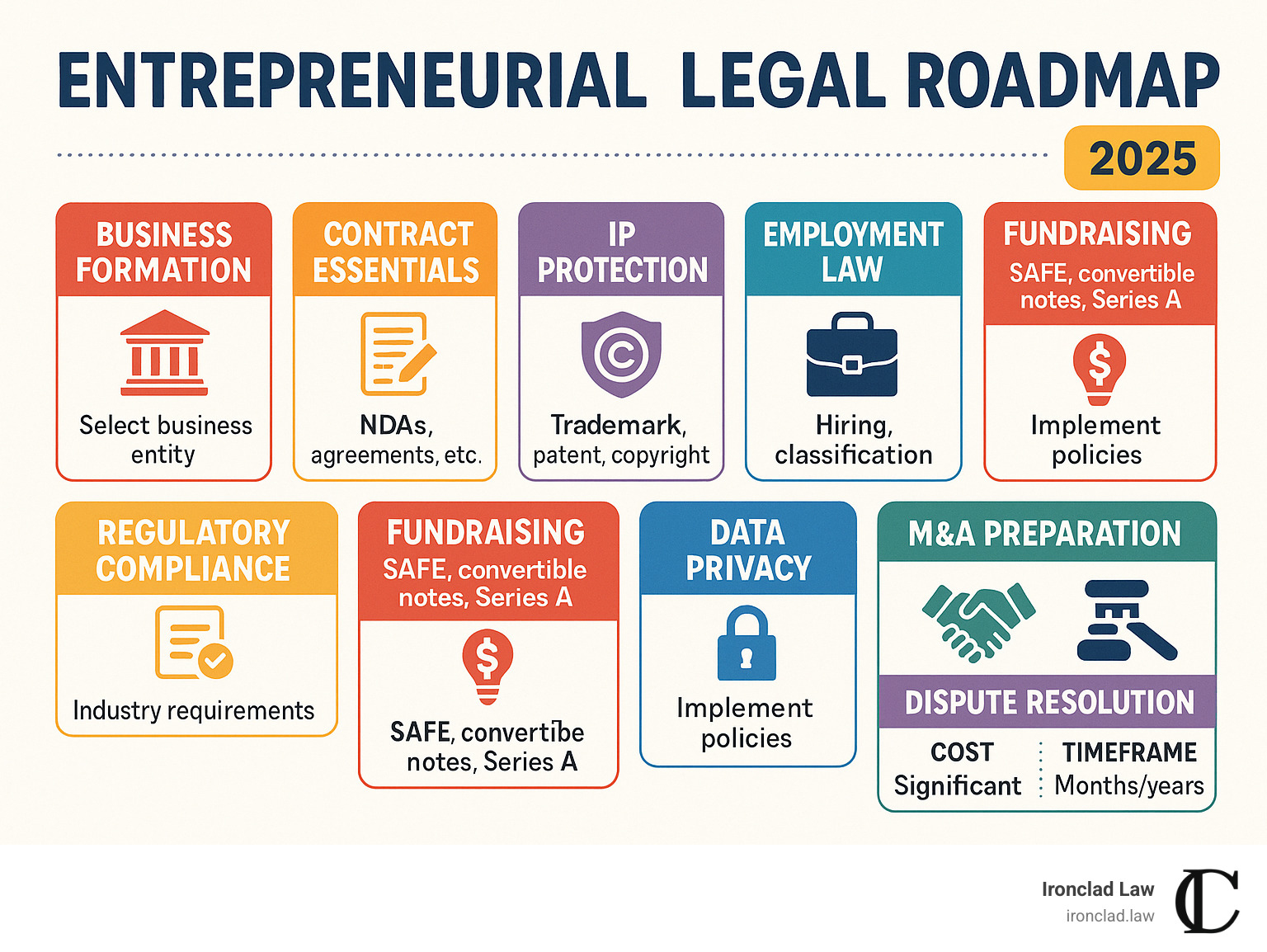
Essential Legal Services Every Entrepreneur Needs:
- Business Formation – LLC vs Corporation setup with proper equity structure
- Contract Protection – NDAs, service agreements, and vendor contracts
- Intellectual Property – Trademark, patent, and copyright registration
- Employment Law – Hiring practices and worker classification compliance
- Regulatory Compliance – Industry permits and privacy law adherence
- Fundraising Support – SAFE notes, convertible notes, and Series A preparation
- Risk Management – Dispute resolution and litigation protection
The research shows striking results: businesses with proper legal planning from day one have dramatically higher survival rates. As Business Link wisely notes, “it is much less expensive to hire a lawyer to do things properly when starting out than to hire a lawyer in an emergency when things go wrong.”
Free and low-cost options exist too. The American Bar Association recommends lawyers provide 50 hours of pro bono service annually, often helping entrepreneurs and small businesses. Programs like LCCRSF’s Legal Services for Entrepreneurs offer free consultations to qualifying Bay Area businesses.
I’m Michael Hurckes, Managing Partner at Ironclad Law, where I’ve spent years helping entrepreneurs steer complex legal services for entrepreneurs through our AI-powered approach that delivers big-firm quality at mid-level pricing. My experience in litigation, financial services, and M&A gives me unique insight into the legal challenges that can make or break a growing business.
Why Early Legal Help Matters
Think of early legal help like buying insurance for your car—you’d never drive without it, but somehow entrepreneurs launch businesses without proper legal protection every day. The difference? When your business crashes without legal coverage, the bills can destroy everything you’ve built.
Here’s the reality check: legal services for entrepreneurs cost a fraction upfront compared to fixing problems later. Business Link puts it perfectly: “it is much less expensive to hire a lawyer to do things properly when starting out than to hire a lawyer in an emergency when things go wrong.”
When you’re scrambling to fix legal disasters, you’re paying premium rates for urgent work while your business bleeds money. Smart entrepreneurs flip this script—they invest early and sleep well at night.
The American Bar Association’s 50-hour pro bono recommendation creates a hidden opportunity for qualifying entrepreneurs. Many experienced attorneys dedicate these hours specifically to helping startups get their legal foundation right.
The Small Business Administration research shows businesses with proper legal planning from day one have dramatically higher survival rates and growth potential. This isn’t just correlation—it’s protection in action.
Top 10 Essential Legal Services for Entrepreneurs
Think of legal services for entrepreneurs as your business insurance policy—except instead of protecting you after something goes wrong, they prevent problems from happening in the first place.
Entity formation sits at the foundation because it affects everything else—your taxes, liability protection, and ability to raise money. Contract drafting and review comes next because every business relationship needs clear agreements. Intellectual property protection often gets overlooked until it’s too late.
Employment and independent contractor law becomes critical the moment you hire help. Regulatory compliance varies by industry but affects everyone. Fundraising and financing documents matter when you’re ready to grow.
Data and privacy policies aren’t just for tech companies anymore. Mergers and acquisitions readiness might seem premature, but preparing early creates more opportunities. Litigation and dispute resolution skills become essential when prevention isn’t enough.
These ten areas work together to create a comprehensive legal foundation that grows with your business. Smart entrepreneurs address each area proactively rather than reactively.
1. Corporate Business Formation – legal services for entrepreneurs
Your business entity choice sets the stage for everything that follows—taxes, liability protection, fundraising potential, and even your exit strategy.
LLCs work beautifully for straightforward businesses that want protection without complexity. You’ll shield your personal assets from business debts while enjoying pass-through taxation. Corporations become essential when you’re thinking bigger. Planning to raise venture capital? Want to offer employee stock options? Legal services for entrepreneurs almost always recommend C-Corporation structure for these scenarios.
The founders’ equity conversation gets tricky fast. We’ve seen partnerships dissolve over ownership disputes that could have been prevented with proper vesting schedules. The 83(b) election alone can save founders thousands in taxes, but you only have 30 days after receiving restricted stock to file it.
Delaware incorporation makes sense for growth-oriented businesses even if you’re not physically there. Delaware’s business courts understand complex corporate issues better than most states, and investors expect to see Delaware entities.
More info about Corporate Business Formation

2. Strategic Business Planning
Strategic business planning creates the legal framework that supports your vision as it grows from startup to success story.
Your growth roadmap needs solid legal infrastructure from day one. We work with entrepreneurs to design equity incentive plans that attract top talent, advisory board agreements that bring in experienced guidance, and expansion strategies that won’t trigger unexpected securities law complications.
Governance structures prevent the founder disputes that kill promising companies. Clear voting agreements, decision-making processes, and conflict resolution mechanisms keep everyone focused on building the business instead of fighting each other.
Exit strategy planning starts now, even if “exit” feels like a distant concept. The legal groundwork begins with how you structure everything today. We help you make choices that maximize your future options and minimize tax headaches when that exit opportunity arrives.
More info about Strategic Business Planning
3. Contract Drafting & Review – legal services for entrepreneurs
Contracts are the backbone of every business relationship you’ll ever have. They’re your protection, your clarity, and often your lifeline when things go sideways.
Non-Disclosure Agreements (NDAs) are your first line of defense when sharing your brilliant idea. We craft NDAs that actually protect your competitive advantage while being reasonable enough that people will actually sign them.
Master Service Agreements (MSAs) are game-changers for ongoing relationships. Instead of negotiating the same terms repeatedly, you hammer out the framework once. Service agreements define exactly what everyone expects from the relationship.
When we review contracts for entrepreneurs, we’re explaining how each clause affects your day-to-day operations, your cash flow, and your risk exposure. The contract provisions that matter most include payment terms, intellectual property ownership, limitation of liability clauses, and dispute resolution mechanisms.
More info about Contract Review
4. Intellectual Property Protection
Your intellectual property is often your business’s crown jewel—the thing that sets you apart from competitors and creates real value.
Trademark protection begins with smart choices about your brand. Federal trademark registration gives you nationwide rights and serious legal muscle when someone tries to copy your brand. Patent strategy demands perfect timing. You must file your patent application before you tell the world about your invention.
Copyright protection covers your creative works and code. Copyright protection starts automatically when you create something original, but registering your copyrights gives you much stronger legal remedies.
Licensing deals turn your IP into revenue streams. Trade secrets require systematic protection. Some of your most valuable information might be better protected as trade secrets than through patents, but only if you actually keep things secret through proper legal protocols.
The key is building IP protection into your business operations from day one. Legal services for entrepreneurs should always include IP strategy because waiting too long often means losing protection forever.
5. Employment & Independent Contractor Law
Getting your hiring right from day one can save you thousands in penalties and legal headaches down the road.
Worker classification is where most entrepreneurs stumble. The IRS wants to know if someone is truly an independent contractor or if they should be classified as an employee. Get this wrong, and you’re looking at back taxes, penalties, and potential lawsuits.
The legal tests for classification aren’t intuitive. The IRS, Department of Labor, and state agencies each have their own standards. They look at factors like who provides equipment, whether the work is integral to your business, and how permanent the relationship is.
Hiring your first employee changes everything. Suddenly you need payroll systems, workers’ compensation insurance, and compliance with wage and hour laws. Employee handbooks aren’t just nice-to-have documents—they’re your first line of defense against discrimination and harassment claims.
Employment agreements become crucial as you grow, especially when employees will access confidential information. Non-compete agreements need careful drafting to be enforceable.

6. Regulatory & Compliance Checkups
Regulatory compliance is your business’s health checkup—ignore it at your own peril. Legal services for entrepreneurs must include ongoing compliance monitoring because regulations don’t pause for busy schedules.
Industry permits create the foundation of legal operation. Every business needs specific permits and licenses, but the requirements vary dramatically based on what you do and where you operate. The permit process often involves multiple agencies that don’t talk to each other.
Privacy laws have become unavoidable for most businesses. If you collect email addresses, store customer information, or process payments online, privacy regulations likely apply to you. GDPR affects any business with European customers, while CCPA covers businesses serving California residents.
Professional licensing adds another layer of complexity. Many service businesses require individual practitioners to maintain professional licenses, but the business entity may also need separate licensing.
Compliance isn’t a one-time event—it’s an ongoing relationship. Regulations change constantly, and new requirements appear as your business grows. The smart approach is building compliance into your business operations from the start.
More info about Business Regulatory Compliance
7. Fundraising & Financing Documents
Raising capital feels exciting until you hit the legal paperwork. The wrong documents don’t just slow down deals—they can kill them entirely or create expensive problems down the road.
SAFE notes have revolutionized early-stage funding by cutting through traditional complexity. Simple Agreement for Future Equity documents let you raise money quickly without setting current valuations. But the terms you choose today directly impact how much of your company you’ll own after future funding rounds.
Convertible notes work when you need more structure than SAFE notes provide but aren’t ready for full equity rounds. Series A preparation involves serious legal complexity. Stock purchase agreements, investor rights agreements, and board governance documents all need to work together seamlessly.
Due diligence preparation means organizing your legal documents, contracts, and compliance records so investors can review everything efficiently. We help entrepreneurs create clean data rooms that build investor confidence.
Smart legal services for entrepreneurs in the fundraising space focus on speed and investor expectations. Every day your fundraising process drags on increases risk.
More info about Due Diligence Counsel
8. Data & Privacy Policies
Data privacy isn’t just about being a good corporate citizen—it’s about avoiding devastating fines and keeping your business doors open.
GDPR reaches far beyond European borders. Many US entrepreneurs find too late that having even a handful of European website visitors can trigger GDPR compliance requirements. The regulation doesn’t care if you’re a small startup—if you process personal data of EU residents, you’re subject to massive fines.
California’s privacy laws create a domino effect across the US. The California Consumer Privacy Act (CCPA) affects any business that serves California consumers and meets certain thresholds. Other states are following California’s lead.
Your website needs more than generic templates. Those free privacy policy generators often create more problems than they solve. We draft eCommerce terms and privacy policies that accurately reflect how your business operates while providing maximum legal protection.
Data breach response planning prevents panic and minimizes damage. When a data breach happens, your response in the first 72 hours determines whether you face minor inconvenience or business-ending consequences. We help you develop incident response plans that include immediate containment procedures and notification requirements.
9. Mergers & Acquisitions Readiness
Planning to sell your business someday? Even if that exit feels years away, M&A readiness starts now. The entrepreneurs who prepare early get higher valuations and smoother transactions.
Letters of Intent (LOIs) kick off serious acquisition discussions. These aren’t binding contracts, but they establish deal terms and protect your negotiating position. Deal structure can make or break your financial outcome. Asset sales, stock sales, and mergers each create different tax consequences and liability exposures.
Earn-out provisions solve the valuation puzzle when buyers and sellers see different futures for the business. Earn-outs let you get paid for future growth while giving buyers confidence they’re not overpaying.
Due diligence preparation separates serious sellers from wishful thinkers. When buyers examine your business with a microscope, organized documentation shows professionalism and builds confidence. We help you maintain transaction-ready files throughout your business lifecycle.
Smart entrepreneurs build legal services for entrepreneurs relationships that support both growth and eventual exit.
More info about Mergers & Acquisitions
10. Litigation & Dispute Resolution
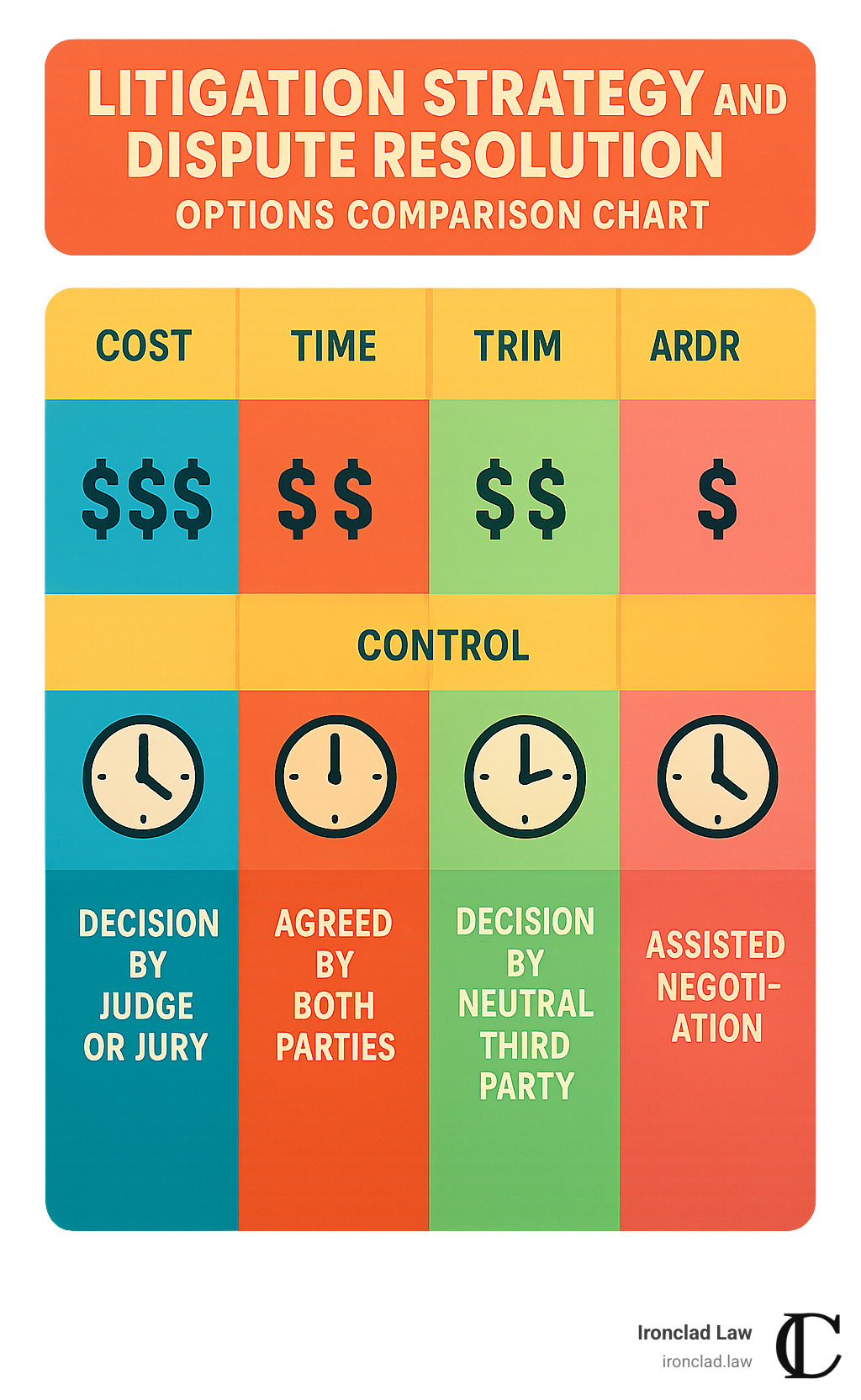
Business disputes happen to even the most careful entrepreneurs. When they do, having the right legal team can turn a potential disaster into a manageable situation.
Trial advocacy experience becomes crucial when negotiations fail. At Ironclad Law, we’ve built our reputation on aggressive litigation that gets results. Our track record includes complex business disputes and challenging DCF lawsuits where other firms might hesitate to take strong positions.
Settlement strategy often delivers better outcomes than lengthy trials—but only when you negotiate from a position of strength. Understanding what would happen at trial gives you leverage in settlement discussions.
Smart contract drafting prevents many disputes before they start. Dispute resolution clauses in your agreements can save thousands in legal fees later. We help you choose the right dispute resolution mechanisms for different types of business relationships.
When disputes do arise, quick action often determines the outcome. The earlier you involve experienced legal services for entrepreneurs in dispute resolution, the more options you have.
Affordable & Pro Bono Options
Quality legal services for entrepreneurs don’t have to drain your startup budget. Smart entrepreneurs know where to find affordable help.
The LSE program is a game-changer for qualifying entrepreneurs. Legal Services for Entrepreneurs provides completely free legal consultations to Bay Area small businesses. If you’re low-income, operating in underserved communities, or committed to community hiring, you might qualify for free help.
University law clinics offer real legal help while training future lawyers. Programs like Toronto Metropolitan University’s Law & Business Clinic provide free services to students and community members running small businesses.
Community Small Business Development Centers connect you with legal resources. SBDCs offer free business counseling and maintain networks of affordable legal service providers. Many host regular legal clinics where you can get quick answers without the meter running.
The American Bar Association’s recommendation that lawyers provide 50 hours of pro bono service annually creates opportunities for entrepreneurs who qualify. Many experienced attorneys specifically dedicate these hours to helping startups get proper legal foundations.
Additional resources worth exploring include Legal Services for Entrepreneurs webinars for ongoing education, local bar association pro bono programs, and legal aid organizations. If you need immediate help determining your options, this contact form for free help connects you directly with available resources.
DIY vs Professional Counsel: What’s the Real Cost?
The temptation to handle your own legal work is understandable—especially when you’re watching every dollar. Online platforms and template services promise quick, cheap solutions. But the cheapest option upfront often becomes the most expensive mistake later.
Online templates seem attractive until you need them to work. We’ve seen entrepreneurs spend $50 on a template, then pay us $5,000 to fix the problems it created. Templates can’t tell you which state’s laws apply or whether that standard clause makes sense for your specific business.
The hidden costs of DIY legal work hit when you least expect them. Missing filing deadlines can cost you trademark rights. Choosing the wrong business entity can create tax problems that persist for years. Unenforceable contract terms leave you vulnerable when disputes arise.
We’ve rescued entrepreneurs from DIY disasters including compliance violations that triggered regulatory investigations, tax elections that couldn’t be corrected, and partnership agreements that fell apart under pressure.
| Approach | Cost Range | Speed | Customization | Risk Level |
|---|---|---|---|---|
| DIY Templates | $50-$500 | Fast | Low | High |
| Online Platforms | $500-$2,500 | Medium | Medium | Medium |
| Traditional Law Firms | $2,500-$15,000+ | Slow | High | Low |
| Hybrid Services | $1,000-$5,000 | Medium | High | Low |
Professional counsel provides value beyond document preparation. When you work with experienced attorneys, you’re buying judgment, risk assessment, and strategic thinking. Legal services for entrepreneurs work best when viewed as business investment, not just compliance expense.
Frequently Asked Questions about Startup Legal Support
Do I really need a lawyer if I’m just testing an idea?
It depends on what “testing” looks like for your business. If you’re just brainstorming alone, you probably don’t need legal help yet. But the moment you start talking to other people about your idea, legal considerations kick in.
Confidentiality becomes critical when you start sharing your idea. Intellectual property protection might be urgent depending on your industry. The smart approach is proportional response—understand your risks and have basic protections ready when you need them.
How much should early-stage legal work cost?
Legal services for entrepreneurs vary dramatically in cost. Basic entity formation ranges from $500 for online services to $5,000 for comprehensive law firm packages. Comprehensive startup legal packages range from $2,500 to $15,000 depending on complexity.
We recommend budgeting 2-5% of your initial funding for legal expenses. Consider the cost of getting it wrong. Emergency legal work commands premium rates, often 2-3 times normal fees.
Where can I find free or low-cost legal help?
Pro bono programs through local bar associations often include small business clinics. Legal aid organizations in many communities serve small businesses. University legal clinics combine student training with community service under faculty supervision.
SCORE mentoring includes lawyers who volunteer their time to help small businesses. The key is understanding what each option provides and choosing the right level of service for your specific needs.
Conclusion
Starting a business without proper legal foundation is like building a house without blueprints—you might get lucky, but you’re probably heading for expensive problems. Legal services for entrepreneurs aren’t just paperwork and compliance boxes to check. They’re the invisible infrastructure that separates businesses that thrive from those that get blindsided by preventable disasters.
At Ironclad Law, we take an assertive approach because we know that passive legal advice doesn’t protect growing businesses. Our experience in aggressive litigation gives us a unique perspective—we’ve seen what happens when legal problems escalate, and we know how to structure your business to avoid those battles entirely.
Our clients don’t just get document drafting. They get strategic partners who understand their business goals and help them make legal decisions that support growth rather than create obstacles. When you work with us, you’re getting decades of experience in corporate law, litigation, and business strategy.
Our outsourced general counsel services make sense for entrepreneurs who need ongoing legal support but can’t justify hiring a full-time attorney. We become part of your team, learning your business and providing proactive guidance as you face new challenges.
Whether you’re just starting out with basic entity formation or preparing for complex fundraising and M&A transactions, the right legal counsel makes all the difference. Don’t wait until you’re dealing with an emergency—by then, you’re negotiating from weakness and paying premium rates for urgent work.
Ready to build the legal foundation your business deserves? Let’s talk about your specific needs and develop a cost-effective strategy that grows with your business.
More info about Outsourced General Corporate Counsel Service