
You have 0 items in your cart

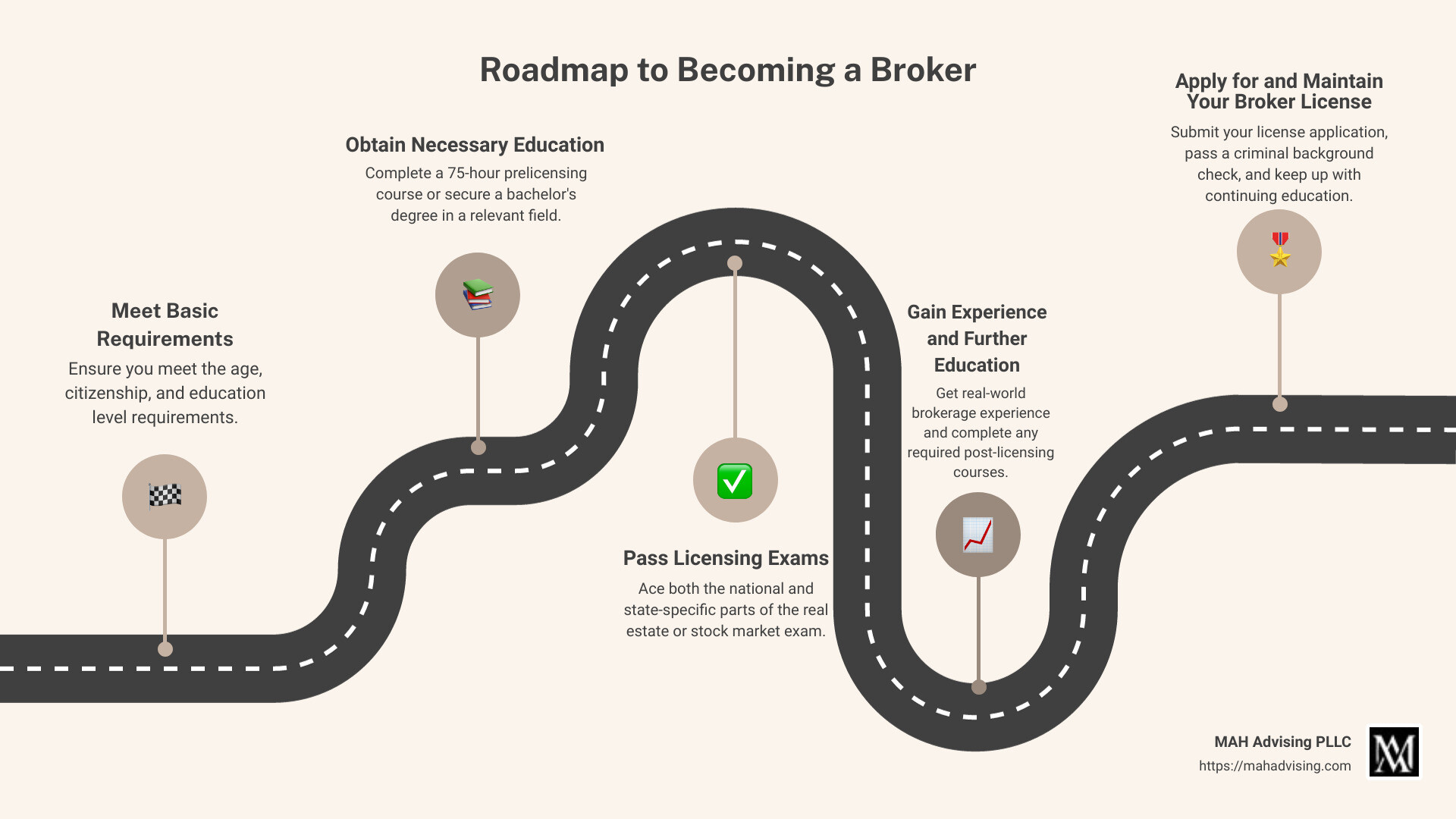
Quick Guide to Becoming a Broker:
- Meet Basic Requirements: Age, citizenship, and education level.
- Obtain Necessary Education: Complete a pre-licensing course or obtain a relevant bachelor’s degree.
- Pass Licensing Exams: Succeed in both the national and state-specific parts.
- Gain Experience and Further Education: Accumulate real-world brokerage experience and complete any required post-licensing courses.
- Apply for and Maintain Your Broker License: Submit your license application, undergo a criminal background check, and keep up with continuing education.
Embarking on a career as a broker means stepping into a world that’s , challenging, and full of potential for growth. Whether you’re drawn to the hustle of the stock market or the strategic negotiation of real estate deals, becoming a broker offers a unique blend of rewards and challenges. This introduction gets right to the heart of what you need to do to launch your brokerage career, so you’re not left sifting through mountains of information to find the golden nuggets of wisdom you need.
At its core, the journey involves a mix of education, certification, and real-world experience. From meeting the basic prerequisites to navigating the complexities of licensing exams and gaining valuable on-the-job experience, each step you take brings you closer to establishing yourself within this dynamic profession.
Let’s dive deeper into what these steps entail and how you can navigate your path to becoming a successful broker with confidence and clarity.
Step 1: Meet Basic Requirements
Becoming a broker is an exciting journey that opens up a world of opportunities. But before you can dive into the nitty-gritty of real estate transactions or financial markets, there are a few basic boxes you need to tick. Let’s break these down into simple, easy-to-understand parts.
Age
First things first, you need to be at least 18 years old. It’s straightforward: no matter how knowledgeable or eager you are, this age requirement is a must.
Citizenship
You must be a US citizen, a non-citizen national, or a qualified alien under federal law. Good news here, you don’t need to be a North Carolina resident if that’s where you’re aiming to practice. This opens the door for many aspiring brokers from different backgrounds.
Education Level
While a high school diploma might get you through the door, having a Bachelor’s degree in fields like Finance, Economics, or Business can provide a solid foundation. However, the critical educational step for real estate brokers in North Carolina is completing a state-approved 75-hour broker prelicensing course. This course is your golden ticket to sitting for the state licensing exam.

These requirements are your starting line. Meeting them puts you on the path to a career that’s as rewarding as it is challenging. Each requirement is a stepping stone, not just a box to check. Your age shows you’re ready to take on responsibility; your citizenship or legal status ensures you’re legally eligible to work, and your education level prepares you for the complexities of the brokerage world.
As you embark on this journey, keep in mind that these requirements are just the beginning. The real estate and financial markets are vast and varied. Your initial qualifications open the door, but it’s your drive, determination, and continuous learning that will define your success in the industry.
In the next section, we’ll explore the necessary education you’ll need to not just enter the field, but excel in it. Stay tuned as we delve into prelicensing courses, Bachelor’s degrees, and real estate schools that will set you apart in the competitive landscape of brokerage.
Understanding these basics is crucial in setting the right expectations and starting your journey on a solid foundation. Whether you’re looking to become a real estate broker in North Carolina or aiming for a career in financial brokerage, these steps are your first milestone towards achieving your professional goals.
Step 2: Obtain Necessary Education
To kickstart your journey on how to be a broker, diving into the necessary education is your next big step. This is where you lay the groundwork for your future success in the brokerage world. Let’s break down what you need to know and do.
75-hour Prelicensing Course
If you’re aiming to become a real estate broker in North Carolina, you must complete a 75-hour prelicensing course. This is non-negotiable. The good news? You can now do this online, which means you can fit it around your current commitments. This course covers all the basics you’ll need to start off in real estate, from property law to the principles of real estate.
Bachelor’s Degree (Finance, Economics, Business)
While not always a requirement for every type of broker, having a bachelor’s degree in finance, economics, or business can set you apart from the competition. It provides a strong foundation and understanding of the market, investment strategies, and financial laws. This is especially crucial if you’re leaning towards a career as a stockbroker or in financial services. It’s about building a robust knowledge base that you can draw upon throughout your career.
Real Estate School
For those focused on real estate, attending a real estate school is a pivotal step. It’s not just about passing exams; it’s where you’ll learn the ins and outs of the industry, from conducting property valuations to understanding the intricacies of property management. Real estate schools offer a blend of theoretical knowledge and practical insights, preparing you for the real-world challenges of brokerage.
Education is not just a hurdle to clear. It’s an opportunity to build a strong foundation for your career. Whether it’s through a comprehensive 75-hour prelicensing course, a bachelor’s degree, or specialized real estate schooling, each step you take is a building block towards becoming a successful broker. And with the flexibility of online learning, there’s never been a better time to start.
In the next section, we’ll delve into the licensing exams, a critical milestone in your journey to becoming a broker.
Step 3: Pass Licensing Exams
Passing the Licensing Exams is like the big test day after all your hard work in school. It’s where you show what you’ve learned and take a giant step toward your goal of how to be a broker. Let’s break it down into simple parts to make it easy to understand.
North Carolina Real Estate Licensing Exam
This is the big one. To become a broker in North Carolina, you need to pass this exam. It covers everything you’ve learned in your 75-hour prelicensing course. Think of it as the final boss in a video game. You’ve trained for this, and now it’s time to win.
National and State Portions
The exam has two parts: the National and the State portions. The National part tests you on general real estate principles that apply everywhere in the U.S. The State portion is all about North Carolina’s specific rules and laws. It’s like having two exams in one day, but don’t worry. You’ve got this.
PSI Testing
PSI is the company that handles the exam. Think of them as the referees making sure everything is fair. You’ll need to register with them and pick a test date. On exam day, show up early, stay calm, and remember what you’ve studied. It’s your time to shine.
Quick Tips for Success:
- Study Smart: Focus on both the National and State study materials. Know them inside and out.
- Practice Makes Perfect: Take as many practice exams as you can. This will help you get used to the format and the pressure.
- Stay Positive: Believe in yourself. You’ve done the work. Now it’s just about showing what you know.
Passing these exams is a critical step in your journey. It’s not just about memorizing facts; it’s about understanding how to use them in real-world situations. Once you pass, you’re not just someone who knows about real estate. You’re on your way to becoming a broker.
In the next section, we’ll explore how to gain experience and further your education, turning that knowledge into action.
Step 4: Gain Experience and Further Education
After passing your licensing exams, you might feel like you’ve climbed a mountain. But the journey to how to be a broker doesn’t stop there. It’s time to turn that knowledge into action and gain the experience and further education you need.
Gain Real-World Experience
First things first, you need to dive into real estate and get your hands dirty. This means working under a broker-in-charge or at a real estate firm. Here’s why this step is crucial:
- Learn by Doing: There’s no substitute for real-world experience. You’ll learn how to handle transactions, interact with clients, and navigate the complexities of the market.
- Build Your Network: Real estate is as much about who you know as what you know. Working in the field helps you build relationships with clients, other brokers, and industry professionals.
- Understand the Market: Every real estate market is unique. By working in your chosen market, you’ll gain invaluable insights that can’t be learned in a classroom.
Broker-in-Charge Course
If you’re aiming to take your career to the next level, becoming a broker-in-charge (BIC) is a fantastic goal. But before you can lead, you need to learn:
- Eligibility: To become BIC eligible, you must have a full broker license on active status and a certain amount of full-time brokerage experience.
- The Course: The 12-hour Broker-in-Charge Course is designed to prepare you for the responsibilities of supervising other brokers. It covers everything from regulatory compliance to effective management techniques.
Post-Licensing Education
Passing the exam and getting your license is just the beginning. North Carolina, like many states, requires post-licensing education to remove the provisional status of your license. Here’s what you need to know:
- Continued Learning: You must complete three 90-hour courses within 18 months of licensure. These courses dive deeper into real estate law, brokerage operations, and other key areas.
- Stay Updated: The real estate industry is always changing. Continuing education keeps you informed about new laws, technologies, and market trends.
Remember, becoming a successful broker isn’t just about completing tasks; it’s about growing as a professional. Each step you take—from gaining experience to furthering your education—builds on the last, making you a more knowledgeable and effective broker.
As we look ahead, keep these steps in mind. They are the building blocks of a rewarding career in real estate. Stay curious, stay motivated, and never stop learning. Your journey from learning how to be a broker to becoming one is well on its way.
In the next section, we’ll discuss how to apply for your broker license and the importance of maintaining it through continuing education and renewal processes.
Step 5: Apply for Broker License and Maintain It
Congratulations! You’re on the final stretch of learning how to be a broker. This step is all about crossing the ‘T’s and dotting the ‘I’s, making sure you’re fully licensed and ready to embark on your new career. Let’s break it down into manageable parts.
License Application
First things first, you need to apply for your broker license. This process is straightforward but crucial. Head over to the North Carolina Real Estate Commission’s website, where you can fill out your application online. You’ll need to create a profile and provide all the necessary information. Honesty and accuracy are key here. Any discrepancies could delay or even derail your application.
Criminal Background Check
As part of the application process, you’ll undergo a criminal background check. This is standard practice and ensures that all brokers meet the high standards of integrity required in the real estate industry. You can submit your background check online, directly through the North Carolina Real Estate Commission’s website. It’s a simple step, but an important one to ensure trust and safety in the real estate market.
Continuing Education
Once you’ve got your license, the learning doesn’t stop there. Real estate is an changing field, and staying on top of new laws, technologies, and market trends is crucial. North Carolina requires brokers to complete continuing education courses to maintain their license. These courses not only keep you informed but also sharpen your skills and knowledge, making you a better broker.
License Renewal
Finally, don’t forget to renew your license. In North Carolina, this needs to be done annually between May 15 and June 30. It’s a simple process but mark your calendar or set a reminder. Letting your license lapse can put a halt to your real estate activities, which is the last thing you want after all your hard work.
By following these steps, you’ll not only acquire your broker license but also maintain it, ensuring you’re always ready to serve your clients to the best of your ability. Being a broker is not just about closing deals; it’s about continuous growth and learning. Stay proactive, stay educated, and your career in real estate will flourish.
Let’s address some common questions you might have about becoming a broker, including the challenges you might face, the time it takes to reach certain milestones, and the role of a qualifying broker in North Carolina.
Frequently Asked Questions about Becoming a Broker
Is it hard to work as a broker?
Working as a broker can be challenging, but it’s also rewarding. It’s not just about buying and selling; it’s about understanding the market, building relationships, and making smart decisions. You’re the boss, which means all the day-to-day operations, from paperwork to prospecting, are in your hands. It requires a mix of skills – being good with numbers, understanding laws, and being a people person.
Some say it’s like juggling while learning to ride a unicycle. But remember, every expert was once a beginner. With the right preparation and mindset, you can navigate these challenges successfully.
How long does it take to become a broker in charge in NC?
To become a broker in charge (BIC) in North Carolina, you first need to be a licensed broker with a “full” status, not provisional. You also need either 2 years of full-time or 4 years of part-time real estate brokerage experience within the last 5 years, or be a North Carolina licensed attorney with 3 years of real estate practice.
After meeting these requirements, you must complete the Commission’s 12-hour Broker-in-Charge Course. So, the timeline can vary based on how quickly you complete your initial licensing, gain the necessary experience, and fulfill the educational requirements. Generally, it could take anywhere from 2 to 5 years, depending on your pace and background.
What is a qualifying broker in NC?
A qualifying broker in North Carolina is the broker responsible for the supervision of a real estate firm’s operations and its associated agents. This role is crucial because they ensure that the firm and its agents comply with all real estate laws and regulations. Think of them as the captain of the ship – they steer the brokerage towards success and keep everything running smoothly and legally. It’s a position of leadership, responsibility, and trust.
To sum up, becoming a broker, especially a broker in charge or a qualifying broker in NC, is a journey that requires dedication, education, and experience. But for those who are up for the challenge, it can be a path to a fulfilling career. MAH Advising PLLC is here to support you every step of the way.
Stay tuned for more insights and guidance on your journey in real estate.
Conclusion
Embarking on the journey how to be a broker is no small feat. It requires dedication, hard work, and a passion for the real estate industry. From meeting the basic requirements to gaining the necessary education and experience, each step is crucial in shaping a successful career in brokerage.
At MAH Advising PLLC, we understand the complexities and challenges that come with this career path. That’s why we are committed to providing unparalleled support and guidance to aspiring brokers at every step of their journey. Our expertise in FINRA compliance and broker-dealer formation services ensures that you have the knowledge and resources to navigate the regulatory landscape with confidence.
Whether you’re just starting out or looking to elevate your career to the next level as a broker-in-charge, we are here to help. Our team of experts brings a wealth of knowledge and experience in corporate formation, compliance financial services, and much more. We are dedicated to helping you achieve your goals and succeed in the competitive world of real estate brokerage.
Becoming a broker is not just about passing exams and obtaining licenses. It’s about building relationships, understanding the market, and making informed decisions that benefit your clients and your career. With MAH Advising PLLC by your side, you have a partner who is invested in your success and ready to assist you in navigating the challenges and opportunities that lie ahead.
Thank you for considering us as your guide on this exciting journey. We look forward to supporting you in achieving your dreams and making a lasting impact in the real estate industry. Let’s embark on this journey together, and make your dream of becoming a successful broker a reality.
Stay tuned for more insights and guidance on your journey in real estate with MAH Advising PLLC.