
You have 0 items in your cart

The Critical Role of Corporate Compliance in Today’s Business Environment
A corporate compliance lawyer is a legal professional who helps businesses adhere to laws, regulations, and internal policies while minimizing legal risks. These specialized attorneys work to prevent legal issues before they arise, rather than just responding to problems after they occur.
What is a corporate compliance lawyer?
– A legal professional who designs, implements, and monitors compliance programs
– Ensures businesses follow applicable laws and regulations
– Helps prevent violations that could lead to fines, penalties, or reputational damage
– Acts as a liaison between the company and regulatory authorities
– Conducts internal investigations when potential violations are identified
In today’s complex regulatory landscape, the stakes have never been higher. Companies face increasingly stringent rules across multiple jurisdictions, with severe consequences for non-compliance. Chief Compliance Officers with a J.D. earn 69% higher total compensation than those without a law degree, reflecting the premium placed on legal expertise in this critical role.
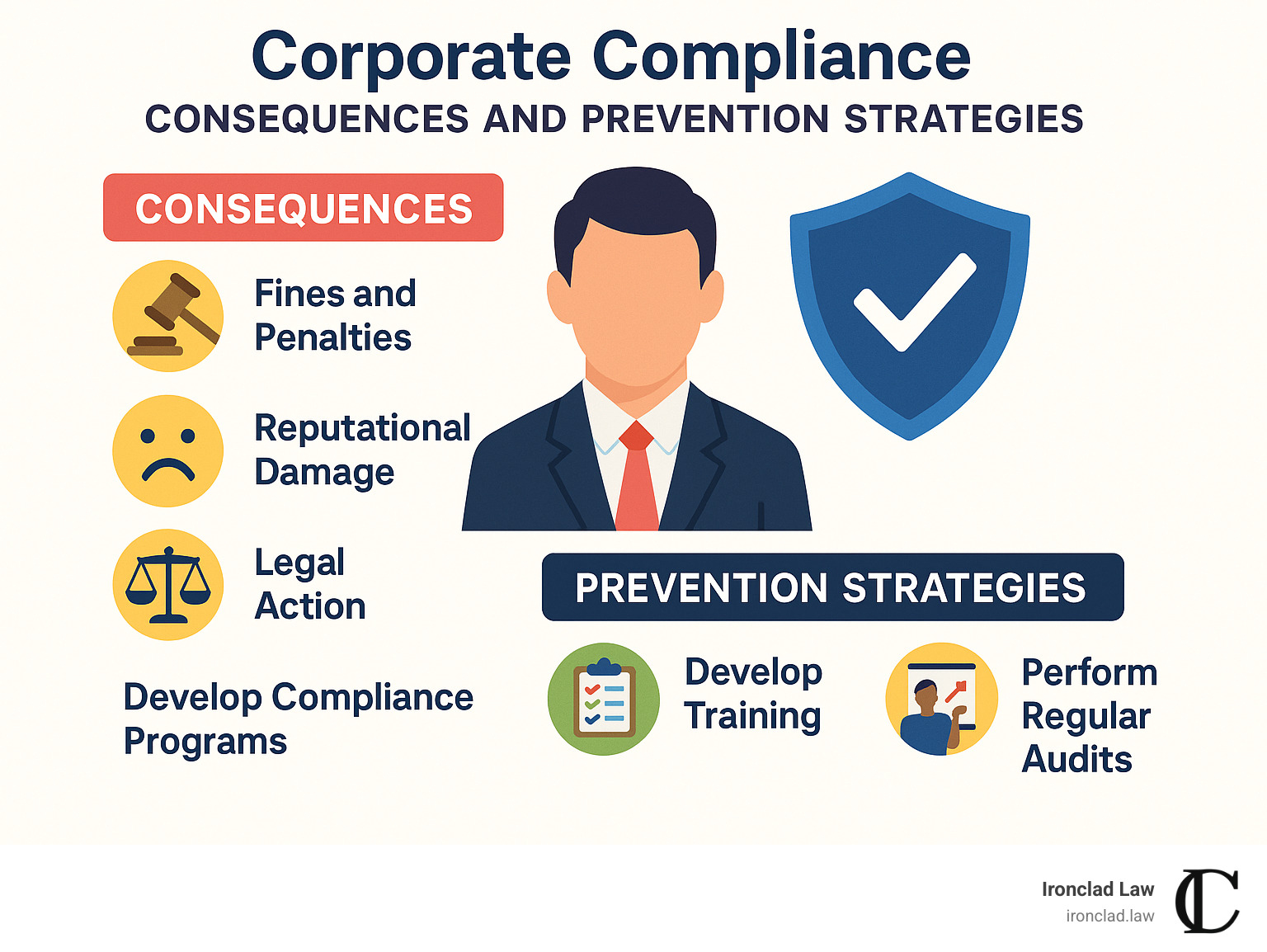
The consequences of compliance failures can be devastating. In recent years, we’ve seen companies pay billions in settlements for emissions violations, banking fraud, and data privacy breaches. Beyond financial penalties, businesses face lasting reputational damage, loss of licenses, and even criminal prosecution of executives.
I’m Michael Hurckes, Managing Partner at Ironclad Law with extensive experience advising clients as a corporate compliance lawyer across financial services, broker-dealer regulations, and investment adviser compliance matters. My background working with organizations to build robust compliance programs has shown me how proactive compliance can transform risk management into a competitive advantage.
What Does a Corporate Compliance Lawyer Do?
A corporate compliance lawyer is your business’s guardian angel in the complex world of regulations. Think of them as your legal GPS, helping you steer the winding roads of compliance before you accidentally drive off a cliff.
Unlike litigation attorneys who swoop in after trouble hits, compliance lawyers work quietly behind the scenes to prevent problems from happening in the first place. It’s the difference between having a smoke detector and calling the fire department when your house is already ablaze.
At Ironclad Law, our approach is simple: we’d rather help you build a fortress than defend a castle under siege. Our compliance attorneys develop strategies that spot potential risks early, create protective policies that actually work, and implement monitoring systems that keep your business on the straight and narrow.
The heart of what a corporate compliance lawyer does involves several critical functions:
Risk assessment that identifies where your business might get into hot water, paired with practical strategies to stay dry. We don’t just point out problems – we solve them.
Policy development that transforms complex regulations into clear, actionable guidelines your team can actually follow. No legal mumbo-jumbo, just straightforward direction.
Training programs that ensure everyone from the CEO to the newest hire understands what compliance means for their specific role. Knowledge isn’t just power – it’s protection.
When potential issues do arise, we conduct thorough internal investigations with the benefit of attorney-client privilege, keeping sensitive matters confidential while getting to the truth.
We also serve as your company’s representative when dealing with government agencies, translating regulatory-speak and advocating for your interests during examinations or inquiries.
How a Corporate Compliance Lawyer Differs From Other Attorneys
A corporate compliance lawyer takes a fundamentally different approach than their legal cousins. Here’s how we compare:
| Aspect | Corporate Compliance Lawyer | Litigator | Transactional Attorney |
|---|---|---|---|
| Primary Focus | Prevention and risk management | Dispute resolution | Deal facilitation |
| Timing | Before issues arise | After problems occur | During business transactions |
| Key Skills | Risk assessment, policy design | Advocacy, courtroom tactics | Negotiation, drafting |
| Business Integration | Deeply embedded in operations | External to daily operations | Project-based involvement |
As one of our compliance colleagues once quipped, “A compliance attorney doesn’t necessarily ‘practice law’ in the traditional sense to add value.” Instead, we’re more like legal Swiss Army knives – blending legal knowledge with business sense, human resources expertise, and risk management skills to keep your organization running smoothly.
Key Responsibilities of a Corporate Compliance Lawyer
The daily work of a corporate compliance lawyer is varied and vital. We’re constantly watching, teaching, checking, documenting, and fixing:
Monitoring and Surveillance: We set up systems that track whether your organization is following both external regulations and internal policies. It’s like having a legal fitness tracker for your business, often powered by specialized compliance software.
Training and Education: We develop and deliver regular training that’s custom to different roles within your organization. The accounting team doesn’t need the same compliance knowledge as your sales force, and we recognize those differences.
Conducting Audits: Regular check-ups help identify where your compliance program might have gaps before regulators find them for you. We don’t just identify problems – we recommend practical fixes.

Why Corporate Compliance Is Mission-Critical for Every Industry
The world of business regulations has transformed dramatically since the early 2000s. What was once considered adequate compliance is now just the bare minimum. Today, corporate compliance isn’t just a box to check—it’s become essential to business survival and success.
Consider this eye-opening statistic: 74% of chief legal officers rank ethics and compliance as somewhat or very important, placing it at the top of their priority list. This isn’t surprising when you look at what effective compliance programs actually deliver:
First, they provide crucial protection against enforcement actions. The Department of Justice doesn’t just look at violations—they explicitly evaluate your compliance program when deciding whether to prosecute and how severely to penalize your organization. Having a robust program in place can literally be the difference between a warning and a crippling fine.
Beyond legal protection, strong compliance builds something perhaps even more valuable: trust. Your customers, employees, and business partners increasingly expect ethical practices and transparency. When you deliver on these expectations, you create lasting relationships that weather even the toughest business challenges.
Investors have also become compliance-conscious. They recognize that well-designed compliance programs signal good risk management and sustainable business practices—making your company a more attractive investment opportunity.
As the DOJ notes in its guidance on evaluating corporate compliance programs, what matters most is whether your program effectively prevents and detects wrongdoing, and whether management genuinely enforces it rather than subtly encouraging misconduct.
Most Common Areas of Compliance Risk
While every business faces unique challenges, several risk areas demand attention across virtually all industries:
Antitrust Laws create significant exposure, especially for larger organizations or those in concentrated industries. These regulations govern how you compete, price your products, and behave in the marketplace—with violations potentially leading to both civil and criminal penalties.
The Foreign Corrupt Practices Act (FCPA) presents major risks for companies with international operations. The prohibition against bribing foreign officials carries severe consequences, with some companies paying hundreds of millions in penalties for violations.
Securities Laws create extensive obligations for publicly traded companies, from disclosure requirements to prohibitions on insider trading and market manipulation. The SEC has become increasingly aggressive in pursuing violations in recent years.
Data Privacy has emerged as a critical compliance area with regulations like GDPR, CCPA, and various industry-specific requirements creating a complex web of obligations. Data breaches can trigger not just regulatory penalties but also devastating reputational damage.
Employment Law touches every organization with employees. From wage and hour rules to workplace safety and anti-discrimination provisions, this area presents daily compliance challenges for businesses of all sizes.

Core Components of an Effective Compliance Program
Building a strong compliance program isn’t one-size-fits-all – it needs to be custom to your organization’s unique structure and risks. But while every business has different needs, certain essential elements form the foundation of any successful compliance effort.
Tone at the top is where it all begins. When leadership demonstrates a genuine commitment to ethical conduct, it cascades throughout the organization. As our research shows, even the most carefully designed compliance program falls flat without authentic buy-in from those at the helm. Your executives need to walk the talk – not just in official communications, but in their day-to-day decisions.
Clear written policies and procedures give everyone a roadmap to follow. Think of these as your compliance constitution – the foundational documents that spell out exactly what’s expected. These shouldn’t gather dust on a shelf (or in a forgotten digital folder). They should be living documents that people actually reference and understand.
Regular education and training ensures your team knows how to apply these policies in real-world situations. The most effective training programs are role-specific, recognizing that different positions face different compliance challenges.
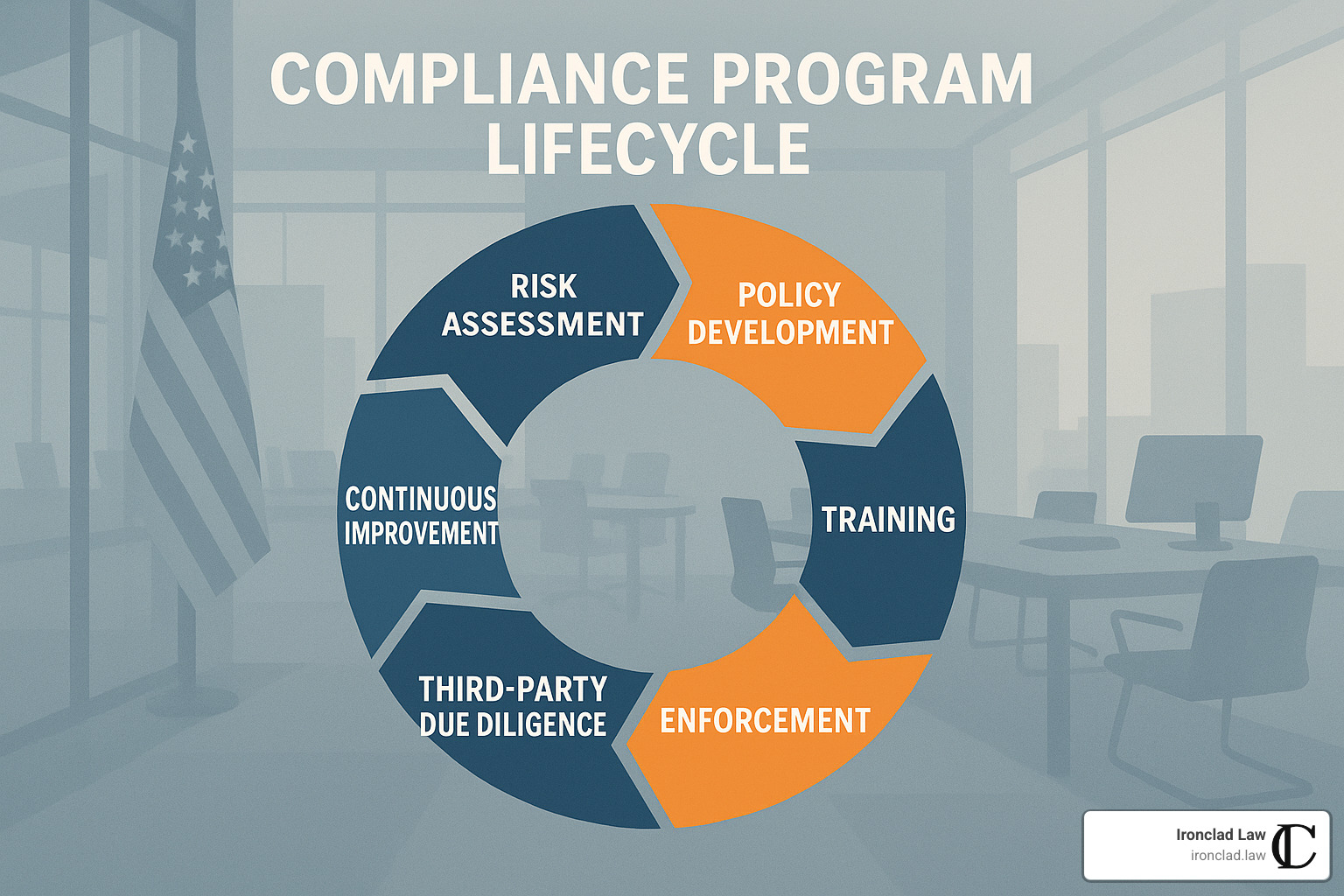
Ongoing monitoring and auditing keeps your program sharp. Rather than waiting for problems to surface, proactive testing helps you identify weak spots before they become violations. Think of it as regular health check-ups for your compliance program – catching issues early when they’re easier to address.
When violations do occur, consistent enforcement matters tremendously. Nothing undermines a compliance program faster than selective enforcement – especially if there’s a perception that executives play by different rules than everyone else. Fair and predictable responses reinforce that compliance isn’t optional.
Don’t forget about third-party due diligence. Your vendors, contractors, and partners can create compliance risks just as serious as your internal operations. A robust program extends your compliance expectations to these relationships, protecting you from indirect liability.
Building Blocks Recommended by the DOJ & Sentencing Guidelines
The Department of Justice and U.S. Sentencing Guidelines offer specific recommendations that can reduce penalties if violations occur. Smart businesses pay close attention to these guidelines.
A thorough risk assessment forms the cornerstone of effective compliance. This isn’t a one-time event but a regular, documented evaluation of where your compliance risks lie based on your operations, industry, and geographic footprint. At Ironclad Law, we help clients identify these risks before they become problems.
Your code of conduct serves as your ethical constitution – a comprehensive, accessible statement of principles that applies to everyone from the mailroom to the boardroom. The best codes aren’t filled with legal jargon but written in clear language that resonates with employees.
Confidential reporting mechanisms give your team safe ways to raise concerns. When employees spot potential violations, they need channels to report them without fear of retaliation. Anonymous hotlines, online portals, or designated compliance contacts can all serve this purpose.
Role of the Chief Compliance Officer (CCO) and Legal Counsel
How you structure your compliance function significantly impacts its effectiveness. A corporate compliance lawyer can help you design this structure to maximize protection while minimizing bureaucracy.
Independence matters tremendously. Your CCO needs sufficient autonomy to raise concerns without fear of retaliation or interference. This sometimes means making difficult or unpopular recommendations – something that requires both organizational authority and personal courage.
Adequate resources are non-negotiable. Compliance isn’t an area where cutting corners pays off. Appropriate staffing, budget, and technological tools are essential investments that typically pay dividends in risk reduction.
Clear reporting lines improve oversight effectiveness. Direct access to the board or audit committee ensures compliance concerns reach those with ultimate responsibility for organizational governance. This direct channel becomes particularly crucial when serious issues arise.
How a Corporate Compliance Lawyer Protects and Adds Value
Think of a corporate compliance lawyer as your business’s guardian angel – one who works tirelessly behind the scenes to keep your company safe and thriving. These specialized attorneys create value in three powerful ways that protect your organization from costly mistakes and legal headaches.
First, they excel at prevention – the most cost-effective form of legal protection. Your compliance attorney crafts customized programs that address your specific risk areas before problems take root. They develop clear policies that everyone can understand, create engaging training that actually sticks, and implement smart controls that catch issues early. This proactive approach saves countless dollars and headaches compared to cleaning up messes after they happen.
When it comes to detection, your compliance lawyer becomes a skilled investigator. They design confidential reporting systems where employees feel safe raising concerns, conduct regular audits that spot weaknesses, and implement monitoring processes that flag unusual patterns. One client told me, “Our compliance attorney spotted a potential FCPA issue in our Southeast Asia operations before it became a major problem – it was like having a legal early warning system.”
Finally, when issues do arise (and in today’s complex business environment, they sometimes will), your corporate compliance lawyer guides your response with precision. They manage government investigations with skill, evaluate whether self-disclosure makes strategic sense, and negotiate with regulators from a position of strength.
As a compliance professional once shared with me, “The compliance attorney acts as a company’s legal frontline, preventing issues rather than reacting to them.” This preventive mindset creates tremendous value.
At Ironclad Law, we take an assertive approach to compliance counsel. We don’t just help clients check regulatory boxes – we build robust protective systems while maintaining readiness to vigorously defend our clients when challenges arise. Learn more about our compliance services.
Setting Up Your Corporate Compliance Lawyer for Success
For your corporate compliance lawyer to deliver maximum value, your organization needs to create the right conditions for their success.
Executive support makes all the difference. When your C-suite and board visibly champion compliance efforts, it sends a powerful message throughout the organization that following the rules matters. Without this top-level backing, even the most talented compliance attorney will struggle to create meaningful change.
Provide your lawyer with a clear mandate that spells out their authority and responsibilities. Ambiguity creates gaps where problems can hide. When compliance counsel has explicit permission to ask tough questions and address issues directly, they can protect your company more effectively.
Data access is crucial for spotting problems early. Your compliance attorney needs visibility across departments to identify potential risks. Restricting their access to certain operations or information creates dangerous blind spots.

Demand, Qualifications & Career Path for Compliance Lawyers
The compliance field is experiencing a remarkable boom, with companies increasingly recognizing the value of legal expertise in navigating complex regulations. This growth has created exciting opportunities for attorneys looking to specialize in this area.
The numbers tell a compelling story about the market for corporate compliance lawyers. In 2022, Chief Compliance Officers earned an average total compensation of $346,000. Those working at public companies did particularly well, averaging $347,000 compared to $242,000 for their private company counterparts. And if you’re wondering whether that law degree pays off in compliance? Absolutely—CCOs with a J.D. earn a whopping 69% more than those without legal training.
“The demand for compliance professionals, especially Chief Compliance Officers, is as strong as it has ever been,” notes one industry expert. This demand translated to impressive salary growth, with compliance positions seeing an average 10% increase in base pay during 2022.
For attorneys considering this path, several qualifications can significantly boost your market value. Professional certifications like the Certified Compliance and Ethics Professional (CCEP) or Certified Regulatory Compliance Manager (CRCM) demonstrate specialized knowledge and commitment to the field. Experience at a law firm also pays dividends—our research shows that compliance officers with law firm backgrounds earn 25% more than those without.
At Ironclad Law, we’re always looking for talented attorneys interested in developing compliance expertise through our specialized practice. Learn more about our compliance attorney opportunities.
Skills Every Aspiring Corporate Compliance Lawyer Needs
Success as a corporate compliance lawyer requires more than just understanding regulations. You’ll need to develop a diverse skill set that combines legal expertise with business savvy.
The ability to translate complex regulatory language into practical business guidance is essential. Your colleagues won’t need legal dissertations—they need clear direction on what they can and cannot do in their daily work.
Strong investigative skills are also crucial. When potential violations arise, you’ll need to gather facts, interview witnesses, and analyze evidence with precision and sensitivity. These investigations often occur under pressure, with significant consequences hanging in the balance.
Communication might be the most important skill of all. You’ll need to explain complex requirements to everyone from entry-level employees to the board of directors, adapting your message to each audience while maintaining accuracy.
Future Outlook: AI, ESG & Global Regulations
The compliance landscape never stands still, and several emerging trends are reshaping the field in exciting ways.
Artificial intelligence and machine learning are changing how companies monitor compliance and assess risk. For corporate compliance lawyers, this means developing new technical competencies to harness these powerful tools effectively. The most successful compliance attorneys will accept these technologies rather than viewing them as threats.
Environmental, Social, and Governance (ESG) considerations have moved from the periphery to the center of corporate compliance. Investors, customers, and regulators increasingly expect companies to address climate impact, social responsibility, and governance practices. This expansion beyond traditional legal risks creates new opportunities for compliance professionals to add value.
Meanwhile, global regulatory frameworks are increasingly converging in areas like data privacy and anti-corruption. While this creates complexity in the short term, it may eventually simplify compliance for multinational organizations. Attorneys who understand these global trends will be particularly valuable.
Frequently Asked Questions About Corporate Compliance Lawyers
What credentials should a corporate compliance lawyer have?
When you’re looking for a corporate compliance lawyer, you want someone with the right mix of education, experience, and specialized knowledge to protect your business effectively.
Most qualified compliance attorneys will have a Juris Doctor (J.D.) degree and active bar membership in the states where they practice. But that’s just the starting point. The best compliance lawyers bring additional qualifications to the table.
Our research consistently shows that compliance officers with legal training (a J.D.) earn substantially more than their non-lawyer counterparts. This salary difference reflects the added value that legal training brings to compliance work – particularly when navigating complex regulatory frameworks.
Beyond the law degree, look for industry-specific experience. A compliance attorney who has worked in your sector brings invaluable context about the unique regulatory challenges you face, whether that’s healthcare privacy rules, financial reporting requirements, or manufacturing safety standards.
How much does it cost to hire a compliance lawyer or CCO?
I understand that cost is a major consideration when bringing compliance expertise into your organization. The investment varies widely based on your needs and approach.
For full-time leadership positions, our research indicates that Chief Compliance Officers at public companies earn an average total compensation of $347,000, while their counterparts at private companies average around $242,000. These figures reflect the significant responsibility and specialized expertise these roles require.
If you’re not ready for a full-time compliance officer, external counsel typically bill hourly rates similar to other specialized legal services. Many businesses find that project-based work with clear deliverables and fixed fees provides more budget predictability.
Can small businesses afford a corporate compliance lawyer?
Absolutely! The good news is that compliance support isn’t just for large corporations with deep pockets. At Ironclad Law, we work with businesses of all sizes to develop right-sized compliance solutions.
For smaller businesses, several approaches make compliance counsel accessible:
Rather than hiring full-time compliance staff, you might engage a corporate compliance lawyer on a project basis to develop core policies, or on a modest retainer for ongoing advice. This gives you access to expertise without the overhead of a full-time position.
Modern compliance management software can also help stretch your resources, automating routine compliance tasks while flagging issues that need attorney attention.
The smartest approach for small businesses is prioritization based on risk. A good compliance attorney will help you identify your most significant regulatory exposure points and address those first, creating a roadmap for building your compliance program as your business grows.
Conclusion
In today’s high-stakes regulatory landscape, a corporate compliance lawyer isn’t just another line item on your budget—they’re essential partners in your business journey. These specialized attorneys help you steer the increasingly complex web of regulations while fostering a culture where integrity becomes part of your company’s DNA.
The numbers speak volumes: organizations with strong compliance programs face fewer enforcement actions, receive more lenient treatment when issues do arise, and build lasting value for everyone involved. It’s no coincidence that compliance professionals with legal training command premium salaries—they bring measurable value that affects the bottom line.
At Ironclad Law, we take a distinctive approach to compliance. We don’t just help you check regulatory boxes; we combine forward-thinking program design with fierce advocacy when challenges emerge. This balanced strategy ensures you’re not just avoiding problems—you’re positioned to respond effectively when they inevitably appear. Our New York team brings deep expertise in financial regulations, corporate governance, and industry-specific compliance frameworks to every client relationship.
Think of effective compliance not as a regulatory burden but as a competitive edge. When ethical conduct and regulatory awareness become woven into the fabric of your organization, you build stronger connections with customers and employees while significantly reducing the risk of costly enforcement actions that can derail your business momentum.
We invite you to learn more about our compliance attorney services and find how our assertive approach can help your business thrive even as regulatory demands continue to evolve. At Ironclad Law, we don’t just help you survive in today’s complex regulatory environment—we position you to thrive in it.